In A Job Well Done, premiered at Tallinn Black Nights Film Festival, Swiss filmmaker Fred Baillif turns his attention to people who find themselves caught between the demands of the state and the basic needs of human beings. Set in Geneva, the film follows a social service organisation working with migrants, many of them from African countries, who have been left without legal status, stable accommodation or any reliable prospect of a future. Its headquarters is an unlikely refuge: a double-decker bus converted into a temporary winter shelter, where people can find a warm place to sleep, something to eat and, perhaps most importantly, someone prepared to listen.
Baillif has long been interested in the lives of people pushed to the margins of Swiss society. In The Fam (La Mif, 2021), he explored the fragile relationships formed in a residential home for teenage girls who could no longer live with their families. Moving between fiction and documentary, the film followed young women whose experiences of rejection and instability brought them together, along with the adults responsible for their care, in an improvised family. Rather than presenting its characters as victims, Baillif allowed their contradictions, anger and vulnerability to shape the film. A Job Well Done continues this interest in alternative forms of solidarity, but shifts its focus from young people in institutional care to the migrants and social workers confronting the consequences of Switzerland's asylum system.
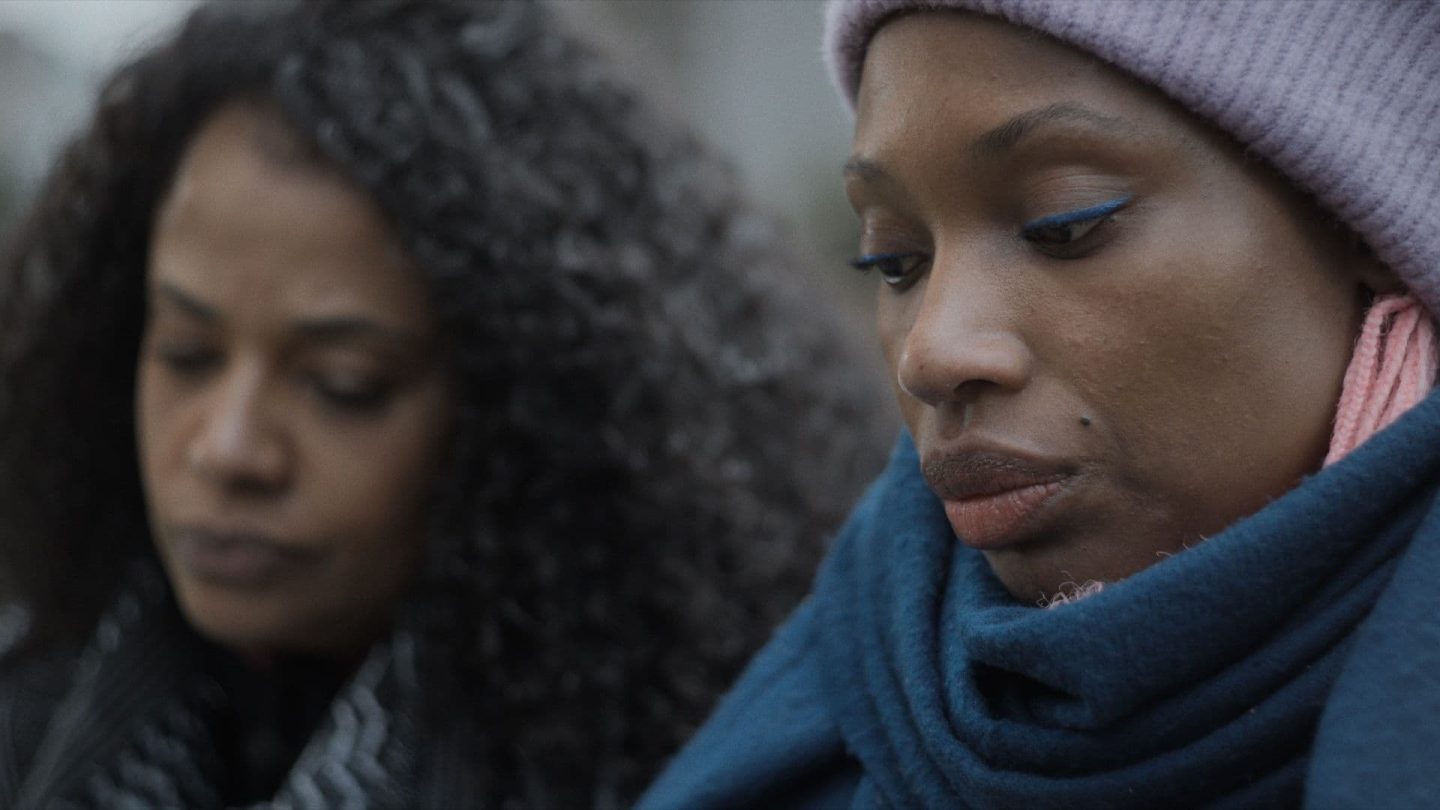
The film's central characters are members of a social service team, including Hawa, Salem and Suzanne, whose everyday work consists of navigating an increasingly complicated bureaucracy while responding to emergencies that cannot wait for official procedures. Their commitment is constantly tested by the gap between what the law permits and what their conscience tells them to do. The bus may offer temporary protection, but even this modest refuge operates according to strict rules: there are limited places, specific admission criteria and regulations that the workers themselves cannot simply disregard.
One episode brings this conflict into particularly sharp focus. Hawa encounters a Nicaraguan family sleeping in a tent on the street. The following day, the police remove their makeshift shelter, leaving the family with nowhere to go in the middle of winter. Hawa tries to persuade her colleagues to let them stay on the bus, but they refuse: the rules do not allow it. She then approaches a hospital and other institutions, only to meet one rejection after another. Faced with the prospect of leaving the family outside, she eventually takes them home. There, however, the consequences of her professional commitment become personal. Her husband, confronted once again with an emergency entering their domestic life, asks pointedly: “Have you brought your work home again?”
This small domestic exchange captures one of the film's central dilemmas. Where should the responsibility of a social worker end when the needs of another person are immediate and the available institutional support is inadequate? Hawa is not simply breaking a rule; she is challenging the assumption that following the rules is always the most ethical course of action. Yet Baillif does not turn her decision into an uncomplicated heroic gesture. Her actions affect her colleagues, her family and the organisation's ability to continue its work. Solidarity comes at a cost, and the film is attentive to the exhaustion and disagreements that accompany it.
Another storyline concerns Djemila, a young woman from Eritrea who faces deportation despite having spent six years building a life in Switzerland. She has learned French, volunteered and pursued university studies. By any ordinary measure, she represents a successful process of integration. But her achievements count for little when set against the logic of the asylum system. Returning to Eritrea, where an authoritarian regime remains in power, is not a realistic or safe option for her. Her situation exposes the contradiction at the heart of official integration policies: a person can do everything expected of them and still be denied the right to remain.
These stories are part of a wider portrait of a system in which human lives are reduced to files, categories and administrative decisions. Baillif's approach recalls the social realism of the Dardenne brothers, particularly in its attention to everyday encounters, moral pressure and characters whose choices emerge from concrete circumstances rather than abstract political arguments. The camera stays close to the people doing the work, observing conversations, disagreements and moments of uncertainty without turning them into melodrama. The performances have a natural, unforced quality, reinforcing the impression that the situations on screen might continue beyond the limits of the film.
There are few striking formal experiments or particularly inventive cinematographic solutions here. The visual language is largely functional, serving the characters and their stories rather than drawing attention to itself. At times, the episodic structure and the accumulation of individual cases make the narrative feel more illustrative than dramatically surprising. But this restraint also reflects Baillif's priorities: he is less interested in constructing a tightly engineered thriller about the asylum system than in showing how its mechanisms operate in the everyday lives of those forced to navigate them — and those trying to help.
The film's political argument is clear, but its strongest moments emerge when it allows the contradictions to speak for themselves. The social workers are not presented as flawless saviours, nor are the migrants reduced to symbols of suffering. Everyone is caught in a network of obligations, limitations and competing needs. Even the people enforcing the rules are part of a larger institutional structure that leaves little room for individual judgement. The question is not simply whether the law should be obeyed, but what happens when obedience requires people to ignore suffering they can see directly in front of them.
A Job Well Done may not offer a new cinematic vocabulary for social realism, but it addresses a subject whose urgency goes far beyond Switzerland. At a time when migration is increasingly discussed through the language of security, control and administrative efficiency, Baillif insists on restoring the human dimension to a debate that too often excludes it. His film asks what solidarity means when it is no longer an abstract principle but a practical decision — one that might put a person's job, family life or freedom at risk. And it leaves us with an uncomfortable question: if offering someone shelter can become an offence, what does that say about the system that makes compassion look like a crime?