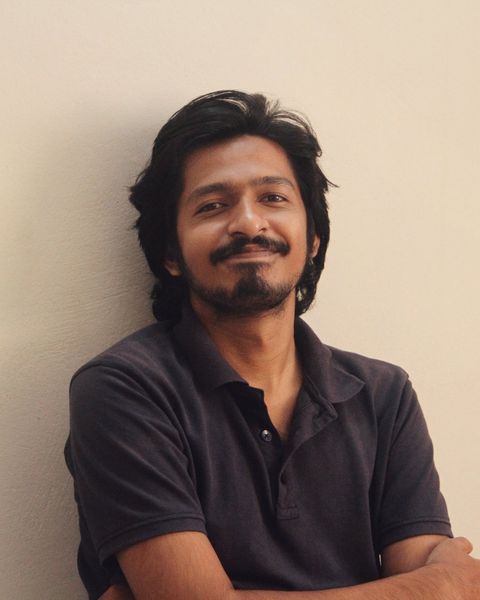
In your film The Stranger, loneliness is not just a feeling; it is a physical space. Do you think we have to become strangers to ourselves before we can truly see the world?
There are moments when a person suddenly feels slightly outside of his own life, as if he is observing it rather than living it. That distance can be unsettling, but it also sharpens perception. In The Stranger, the character moves through places that should feel familiar, yet he experiences them with the unease of someone who has just arrived. When that small rupture appears between who we think we are and what we actually feel, the world becomes more visible, almost raw.
In Yunan, the protagonist seems to be carrying an invisible weight from his past. Do you think exile is not just a change of place, but a state where the soul becomes trapped in a “frozen” time?
Exile changes our relationship with time. A person may build a life somewhere else, yet a part of him remains suspended around a memory that never fully dissolves. That suspended moment becomes something he carries quietly. In Yunan, the character lives in the present, but his inner life still circles around an earlier time.
Yunan feels like a slow walk toward the edge of the world. Is the character looking for a way to finally “wash away” the exhaustion of his life?
He reaches a point where the noise of his life becomes unbearable. The journey toward the island is not an escape from the world but a moment of confrontation with himself. Standing near the sea, surrounded by wind and silence, he faces the fatigue he has carried for years. Sometimes a person needs to reach the edge of something before he can breathe again.
In your films, silence feels like a character of its own. What is silence trying to say to the audience?
Silence allows the viewer to enter the inner space of the characters. When words fall away, attention shifts toward smaller details: a pause, a breath, the movement of light across a room. Those moments hold emotional information that dialogue often interrupts. Silence asks the audience to remain present and attentive, almost like listening to someone thinking.
You film landscapes with so much patience. Are you trying to capture the soul of the place, or are you looking for a reflection of your own soul in the scenery?
Every landscape carries its own rhythm. Wind, weather, and time shape its atmosphere long before a camera arrives. I try to spend time with a place until that rhythm begins to reveal itself. At the same time, the camera inevitably carries the inner world of the person behind it. When those two presences meet, the landscape begins to feel alive within the film.
Your films move at the speed of a heartbeat. In a world that is moving so fast, why is it important for you to make the audience slow down and stay in the “waiting”?
Cinema can create a different experience of time. When a film moves more slowly, the viewer begins to notice the small transformations within a moment: the shift in someone’s expression, the way light changes, the quiet tension between two people. Waiting becomes part of the experience. The audience begins to inhabit the same duration as the characters.
You were born in Kyiv, have roots in the Golan, and live in Germany. When you close your eyes and think of “home,” what is the first image that comes to your mind?
The first image is usually a landscape touched by wind. A quiet horizon, a field under changing light, the feeling of open space. Home gathers fragments from different places I have lived or remembered. It feels less like a single point on the map and more like an inner landscape made of memory and longing.
The way you use fog and soft light in your films is so poetic; it feels as if you are writing poetry through your films. What is the thought process behind transforming cinematography into this kind of “visual poetry”?
Light and atmosphere carry emotional meaning. Fog softens the edges of the world and creates a sense of distance, while diffused light allows the image to breathe. These elements give the frame a fragile quality. The camera begins to observe transitions rather than just events. Through those visual textures, the image can express feelings that remain difficult to articulate directly.
Whether it’s the cold wind or the sea, nature is always “talking” in your films. Do you think the land feels the same pain that humans do?
Nature in my films shares the same emotional space as the characters. The wind, the sea, or the silence of a landscape often resonate with what the characters carry inside them. These elements remind us that human life unfolds within a much larger environment shaped by time and memory.
As you look toward the final film of your trilogy, do you feel your characters are finally finding a way back home, or is “home” something that can only exist in our myths and breaths?
The trilogy follows characters who move through memory, distance, and reconciliation while searching for a sense of belonging. Each film approaches that question from another angle. The final chapter continues this journey. Home might appear in unexpected moments: in a gesture, a conversation, or a quiet recognition between people. Whether it becomes a place or remains something we carry within ourselves is part of the story still unfolding.