Some moments in history survive in books, some in photographs, and others in recordings that are left forgotten in archives. Salomé Jashi's An Incomplete Day in the History of Georgia 10.06.93 begins with one such recording and discovers an entire country's uncertainties within it. Made entirely from archival footage of a Georgian parliamentary session held on 10 June 1993, the film returns to a crucial moment in the early years of Georgia's independence. What initially appears to be a discussion about monetary policy gradually reveals itself as something much larger: a country attempting to determine its economic future, political identity and relationship with the world around it.
To understand the importance of that parliamentary session, one must return to Georgia in the early 1990s. Following the dissolution of the Soviet Union and the restoration of independence in 1991, the country entered a period of extraordinary instability. The political situation was deeply unsettled, armed conflict had devastated parts of the country, and the economy was in serious trouble. The collapse of established Soviet economic structures left Georgia struggling with shortages, disrupted trade and a severe lack of financial stability.
The Russian rouble continued to play a central role in everyday transactions, even as the newly independent country was trying to establish its own institutions and economic direction.
The introduction of the Georgian kuponi was part of that difficult transition. On 5 April 1993, the currency entered circulation as a temporary means of addressing the shortage of Russian rouble banknotes. Initially, it was intended to circulate alongside the rouble at an equal value. However, following Russia's monetary changes in July, Georgia declared the kuponi its sole legal tender on 3 August 1993. The currency soon became associated with extraordinary inflation and a dramatic loss of purchasing power. By the end of 1993, annual inflation had reached approximately 7,500 percent. What had been conceived as a temporary solution became an economic disaster, and the country eventually replaced the kuponi with the lari in 1995.
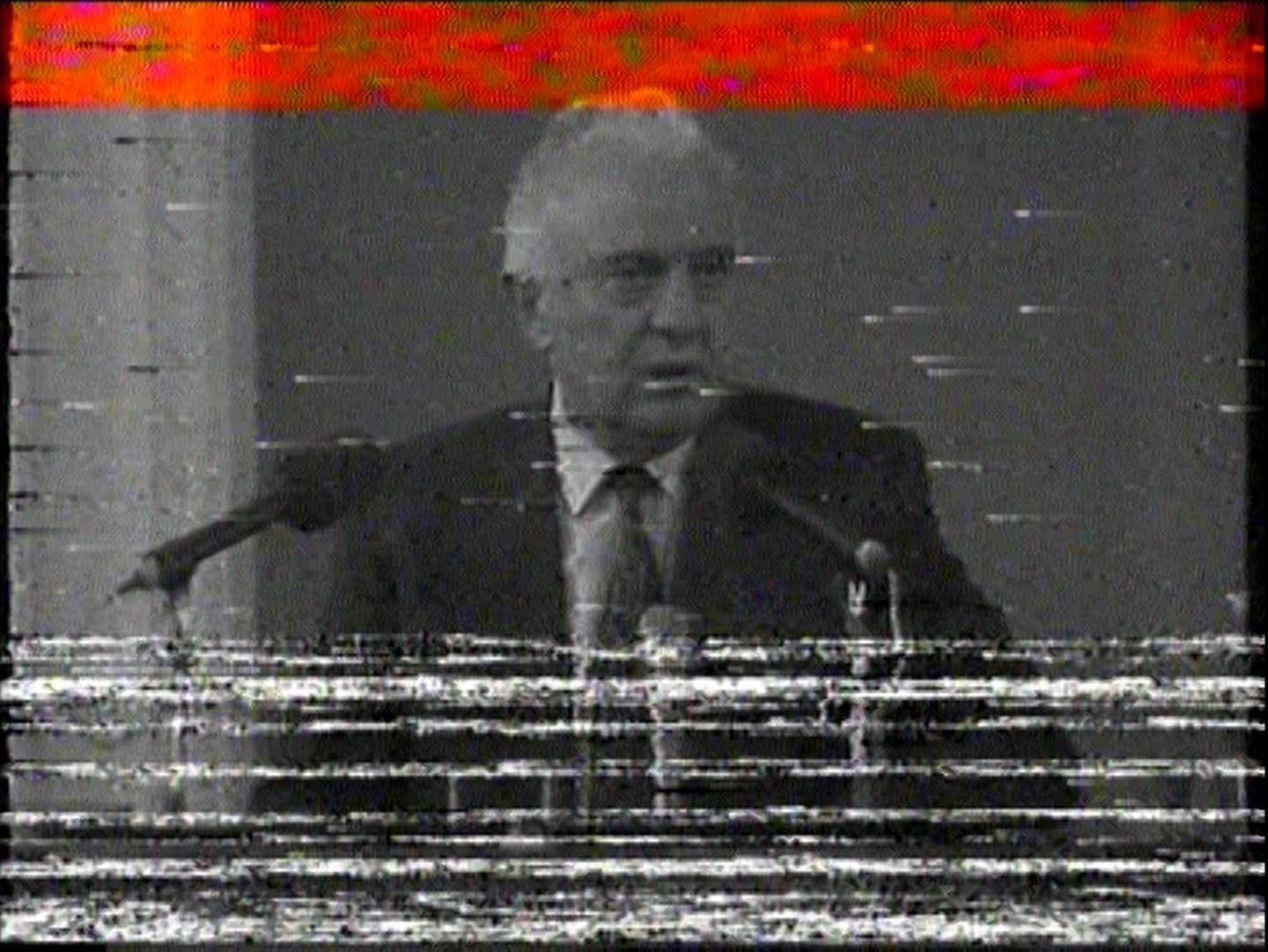
Jashi takes us back to 10 June, before that final decision, when the Georgian parliament was discussing the country's monetary future. Under the leadership of Eduard Shevardnadze, parliamentarians from different political positions raise questions about the proposed currency, its possible consequences for international trade, the danger of hyperinflation and the country's vulnerability to Russian pressure. There is no shortage of disagreement. Some express concern about the economic consequences of moving away from the rouble, while others consider monetary independence an essential part of political sovereignty. Behind these arguments is a population already struggling with hunger, rising prices and shortages of basic necessities. The debate is not simply about what people will use to purchase everyday goods. It is about what independence will mean in practical terms.
What makes the film remarkable is the filmmaker's decision to place complete trust in the archive. There are no contemporary interviews, no explanatory voiceover and no newly filmed material to guide us through the historical events. Instead, we are left with the parliamentarians, their arguments, their uncertainties and the atmosphere of a political institution still finding its footing. The footage is visibly damaged, with interruptions, distortions and changes in image quality. Yet these imperfections become an essential part of the experience. Rather than hiding the passage of time, Jashi allows us to see it. The deterioration of the recordings reminds us that history itself is vulnerable, and that what survives is often only a fragment of what once existed.
There is another important dimension to the film's title. The original parliamentary session lasted around twelve hours, but only six hours of recordings could be recovered. Jashi works with this incomplete material to construct a hundred-minute film. The incompleteness is therefore not merely a reference to the limitations of the archive; it also speaks to the impossibility of capturing an entire historical moment. There were countless lives outside that parliamentary chamber, countless experiences of the economic crisis that could never be represented by the proceedings alone. Nevertheless, what we witness offers a valuable entry point into understanding that period. The archive does not give us the whole history, but it allows us to approach it.
This is where the power of documentary becomes particularly evident. Cinema can preserve what time threatens to erase, but it can also return historical material to the present and give it another life. Jashi does not attempt to make the footage look contemporary or turn the politicians into characters in a conventional historical drama. She finds cinema within the material itself. The duration of the debate, the repeated arguments, the awkward pauses and the changing expressions gradually acquire their own rhythm. A parliamentary sitting becomes an unexpectedly absorbing cinematic experience.
There is also something unsettling about watching these discussions from the present. Questions of sovereignty, economic dependence and the influence of Russia remain deeply relevant to Georgia. The distance of more than three decades does not make the debate feel entirely remote. Instead, it gives the film an additional resonance, allowing us to consider how the decisions and uncertainties of one historical period continue to shape the identity of a country.
With An Incomplete Day in the History of Georgia 10.06.93, Salomé Jashi offers a valuable reminder of why archives matter and why documentary cinema remains such an important way of engaging with history. It is not necessary to reconstruct everything or provide answers to every question. Sometimes, preserving a moment and allowing us to witness it again is meaningful enough. A damaged recording, an unfinished historical account and a parliamentary debate from thirty-three years ago become the material for a film that asks us
to reconsider how history is remembered. What survives may be incomplete, but it is not insignificant.