Ankita, you began this letter when your child was "six weeks and three days" old, barely a smudge on an ultrasound. I would love to hear about the beginning of this letter. What made you want to start speaking then?
The film began with my own unexpected pregnancy. It brought back memories from my childhood, particularly those connected to my father, his absence and the ways in which it had shaped my childhood.
As I began revisiting the past, I became increasingly aware of how differently memories exist within us. Some things I remembered quite clearly, some I had reconstructed from stories that others had told me, and some could have been my own imagination, which, over time, I had perhaps started believing to be true.
This made me think about how memory actually works. It is rarely a fixed or entirely factual account of the past. It is constantly being reconstructed through our own recollections, what we hear from others, and the meanings we attach to our experiences over time. I was interested in how these different versions of the past coexist within us, and how they shape our understanding of ourselves and the people around us.
What I found particularly interesting was how something happening in the present could suddenly bring back parts of the past that you hadn't consciously revisited in years. The pregnancy became that trigger for me. It made me look back at my own childhood, but it also made me think about the future, about what we inherit from our parents, what we carry into our own lives, and how our experiences might influence the choices we make.
As I started writing, the text gradually took the form of a letter addressed to the unborn child. It wasn't something I had planned from the beginning; it emerged organically through the process. In a way, the letter became a space where these different experiences of time, the past, the present and the future, could come together.
Your letter is addressed to someone not yet born. Did writing to your child change what you felt able to say about your father?
Yes, it changed my perspective quite significantly. Writing to the unborn child placed me, in a way, in a position that my father must once have occupied. It made me think about what it means to become a parent, the circumstances one finds oneself in, and the decisions one makes in the course of one's life.
For most of my life, I had seen my father primarily through the lens of my own relationship with him, or more specifically, as the father who wasn't there. But as I began writing this letter, I found myself wondering about the person he was before I came into this world. What kind of life had he lived? What were his aspirations, his dreams, his experiences? I also began thinking about him as an individual in the present, with a life and an identity that existed independently of his relationship with me.
I think, for the first time, I began to see him outside the framework of our relationship. started looking at him as a person who had his own history, his own desires and his own way of making sense of the world.
That shift was quite transformative for me. It didn't necessarily erase the experiences of my childhood, but it allowed me to see him differently. I was no longer looking at him only through the experiences I had shared with him, but also trying to understand the life he had lived outside of them. And that opened up an entirely different way of approaching our relationship.
Your father disappeared suddenly and returned just as suddenly, a changed man. How do you carry those two moments together today?
There's actually a considerable amount of time between those two moments, and my feelings towards him changed quite significantly during that period.
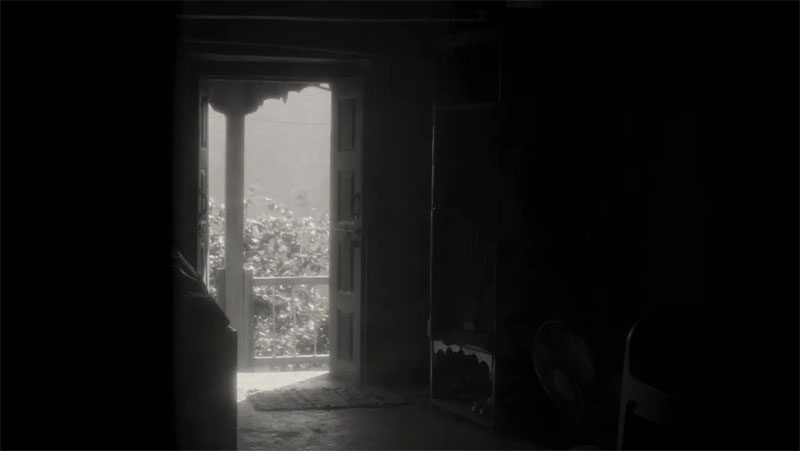
When he disappeared, I was still a child trying to understand where my father was. I remember the curiosity of wanting to know about him, asking questions and having to answer difficult questions from other people. I would sometimes make up stories about him because I didn't have any answers myself. During that time, he existed almost like a ghost in my life, someone I knew largely through the stories others told me and the stories I began creating around his absence.
As I grew older, that curiosity gradually turned into resentment. There was an anger in not having answers to questions that were so fundamental to me as a child. But eventually, even that resentment began to fade. I think my father remained a shadow in my life for a very long time. He appeared, disappeared and appeared again, but his absence was never entirely an absence. Even when he wasn't physically around, his absence continued to affect me emotionally. I think we are shaped not only by the people who are present in our lives, but also by those who are absent. And in many ways, growing up with his absence shaped how I understood my family, my relationships and the world around me.
You shot in the Himalayan village where he now lives. What did it mean to film him in his own landscape?
When I reconnected with my father after many years, I learnt that he was living in a village called Pabo, which is also my ancestral village. Interestingly, I had never visited it before. So, when I travelled there to meet him, it was quite a surreal experience. I was meeting my father after so many years, and at the same time, I was visiting a place that was part of my own family history but was completely unfamiliar to me.
Initially, there was a considerable distance between us. We barely spoke during the first few days. Gradually, as I started getting to know the village and the people living there, I began to understand the larger context of the place. A lot of villages in Garhwal, including Pabo, are referred to as ghost villages because of the large-scale migration that has taken place over the years. Most people have left in search of work and better opportunities, and many of these villages are now inhabited by just a handful of people, largely the elderly. Against this backdrop, my father's decision to return after spending more than four decades away was particularly interesting. He was someone who had migrated to the city and then eventually chosen to return to his village, almost reversing the direction of migration.
While making the film, I also met several women whose children had migrated for work and hadn't returned home for years, sometimes six years or more. One of these women's experiences is also mentioned in the film. Listening to them made me realise that my father's return was quite unusual, especially in a place where so many families continue to live with the absence of their children.
And then, on a more personal level, it was remarkable for me to see my father there. He seemed so familiar with the people, the language and the rhythms of the village. He was comfortable in his house and in his surroundings. I think it was the first time I had seen him so settled and, perhaps, genuinely happy.
The black-and-white images are composed almost like paintings. How did you and Chetan Kapri decide what a memory of absence should look like?
Chetan and I had many discussions about the visual language of the film. Quite early in those conversations, he suggested that we shoot the film in black and white. I immediately
connected with the idea because it felt very much in keeping with what I had in my mind.
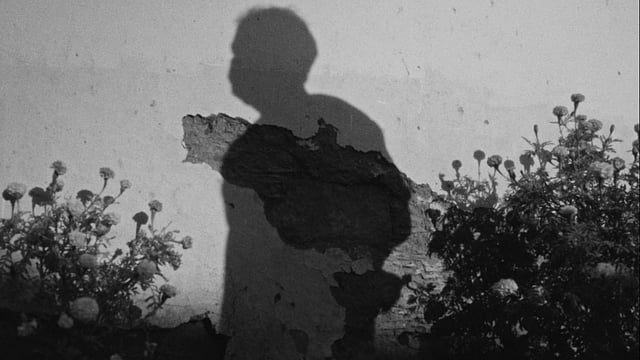
From the beginning, we knew that we wanted the images to carry a sense of absence, something that would linger throughout the film. That became the core idea behind our visual approach, and every decision we made had to return to that feeling.
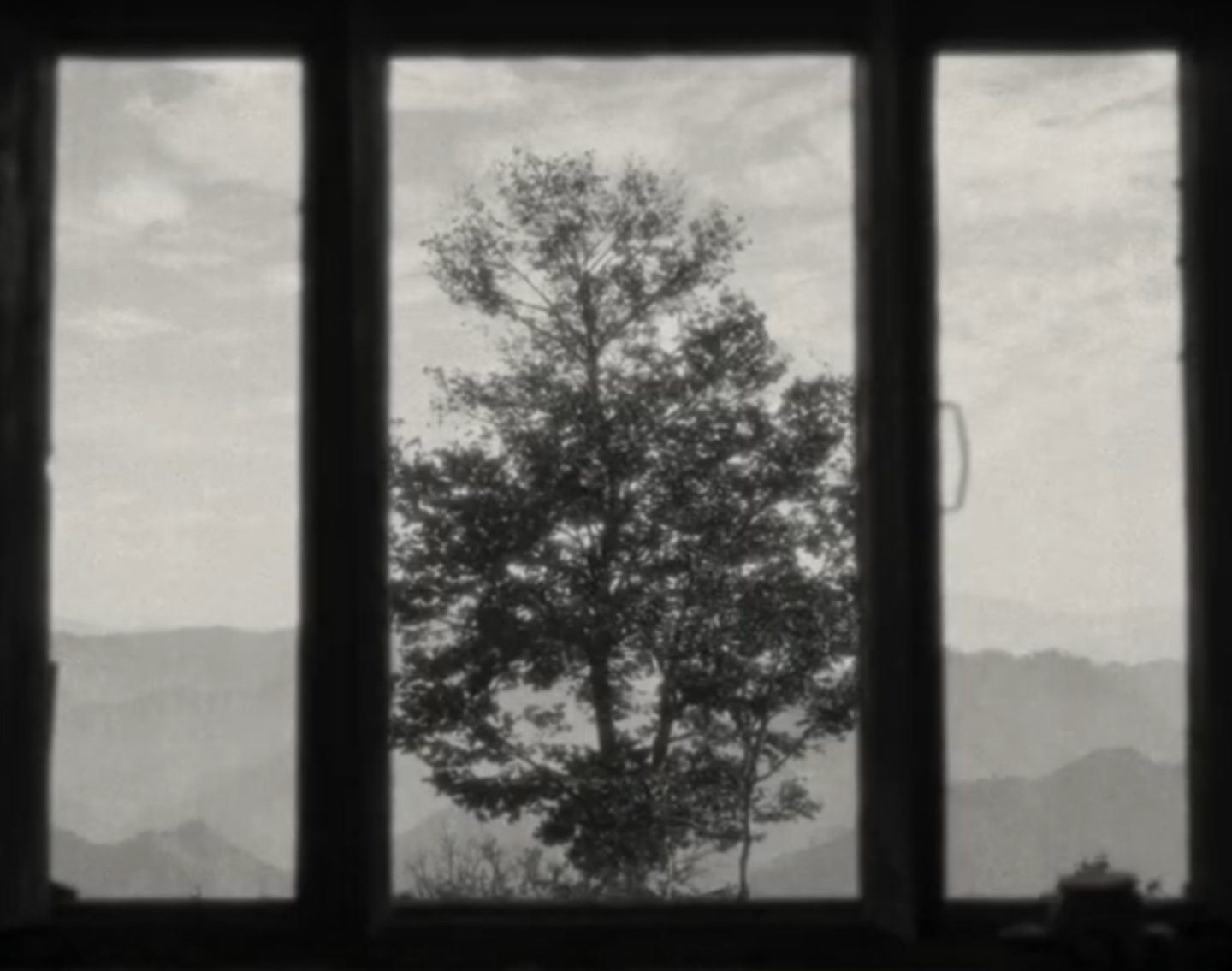
The decision to shoot in black and white came from this very idea. By taking away colour, we felt we were also taking something away from the image. It created a sense of something missing, but also something hidden, as though there were parts of the image or the experience that remained just beyond our reach. It introduced a certain ambiguity to the images, which was very important to us. Memories themselves are ambiguous. They don't necessarily belong to a particular time or place; they move between different moments,
spaces and feelings, often without any clear boundaries. We wanted the images to inhabit that same ambiguity rather than feel like a straightforward representation of reality.
Distance was another important consideration. We never wanted to get too close to my father with the camera. We wanted to observe him from a distance, and this became a consistent visual approach throughout the film. The physical distance between the camera and him also reflected the emotional distance between my father and me. In a way, the camera was looking at him from the same distance that had existed between us for so many years.
Your title holds something very small, six weeks and three days, beside something very vast, all the years before. I'd love to hear what those two measures of time mean to you.
The title comes from a very specific moment in my life. Six weeks and three days was how far along I was in the pregnancy when I discovered it. It was unexpected and brought with it a great deal of turbulence and a whole range of emotions, because I hadn't imagined something like this happening in my life at that particular point. But that moment also set something else in motion. It brought me back to my past, to my childhood and to all the memories I had carried with me over the years.
For me, the title holds these different dimensions of time together. It reflects how the past, present and future are intertwined. The past doesn't necessarily remain behind us; sometimes, something happening in the present can bring it all back, while the possibility of a future can completely change the way we look at what has already happened.
The colour arrives at the very end and so gently in the film. What was your thinking behind that choice?
The film moves through different timelines; it isn't a linear narrative. The arrival of colour at the very end was connected to a transformation that took place through the filmmaking process itself.
I wouldn't say that the film brings about a complete reconciliation between my father and me. I don't think relationships that have taken so many years to become what they are can suddenly be resolved through one film.
But something did change during the process. For the first time, we found ourselves having conversations that we had never really had before. Even though these conversations were often awkward, they were important. In fact, I don't think we could have had them without the process of making this film. And I think that was transformative for both of us. We began to understand each other, perhaps not completely, but in a way that hadn't been possible before.
The colour also brought me back to the time when we were together, as seen through the childhood images in the film. In that sense, it holds a memory of a time we shared, but also a possibility of the future. Perhaps the future could carry a trace of that same feeling of togetherness, even if it takes time for us to get there.
The wind, the silences and the voices of the village seem to carry as much feeling as the images. How did you listen for them while making the film?
Our approach to sound was guided by exactly the same idea that informed our visual language. We wanted the sound to carry that sense of absence and hollowness that runs through the film.
For me, the wind carries a certain emotional turbulence. It has an unpredictability to it, an almost restless quality, which I felt resonated with the emotional landscape of the film. I think sound carries a tremendous amount of the film's emotional weight. Beyond establishing the geographical world of the village, it helps create the emotional world of the film. The silences, the wind and the surrounding sounds all become part of how we experience the relationship between a father and a daughter who have been a lifetime apart.
In that sense, sound wasn't simply there to support the images. It was an equally important part of constructing the emotional experience of the film.
Memory is the film's true landscape, more than any village or mountain. What do you hope people carry out of the cinema from it?
I think memory is something we all carry with us, and it shapes the way we understand the people in our lives and the relationships we have shared with them.
I don't necessarily want to prescribe what audiences should take away from the film. I would rather leave them with a little space to reflect on their own memories and relationships. If the film resonates with someone in some way, or speaks to something they have experienced in their own lives, I think that alone would mean a great deal to me.