Sabu has always had a particular interest in the strange side of human behaviour. His films can move quickly between violence, humour, tenderness and absurdity, often without warning. Arrested Memory, which premiered at Venice, continues that tradition through a story about a detective who is slowly losing the very thing that has made him good at his job: his memory.
Lee is a celebrated police detective in Taipei. After losing his entire team during an investigation, he is left with a deep sense of guilt and transferred to a quiet rural police station. The trauma eventually leads to amnesia, something he tries desperately to hide. Then comes a new case involving the kidnapping of the son of a powerful Japanese businessman. As Lee's memory continues to disappear, he becomes increasingly dependent on instinct. Strangely enough, the less he remembers, the more his instincts seem to guide him towards the truth.
The idea is simple but rich. A detective is supposed to solve a crime by collecting information, remembering details and connecting what has already happened to what might happen next. Sabu takes away that ability and asks what is left when all those familiar tools disappear. His answer is not particularly philosophical in the way the film presents it. Instead, the question is buried inside action, comedy and the strange situations Lee finds himself in.
This is perhaps where Arrested Memory becomes most interesting. Lee does not suddenly become a different person because he has lost his memory. In some ways, he becomes closer to whatever exists underneath memory itself. Sabu talks about how our memories also contain our assumptions and preconceptions, shaping the way we understand everything we encounter. Without them, Lee is forced to experience the world almost from the beginning. There is something funny about watching a highly respected detective become completely lost, but there is also something unexpectedly human in it.
The film's humour comes from this tension. Sabu has described his comedy as being built on tension and laughter, where a situation becomes increasingly uncomfortable before suddenly releasing that tension. Arrested Memory understands this rhythm well. Its comedy does not always come from jokes. Often it comes from Lee's behaviour, from the gap between what he should know and what he actually remembers, or simply from watching a man trying to perform his old identity while that identity is slowly slipping away.
At times, however, the film can feel more conventional than its premise suggests. The detective story, the kidnapping, the criminals and the succession of action sequences occasionally follow familiar genre patterns. The film has many strange ideas inside it, but not every one of them feels equally developed. There are moments when you can sense the more conventional machinery of the thriller underneath Sabu's eccentricity.
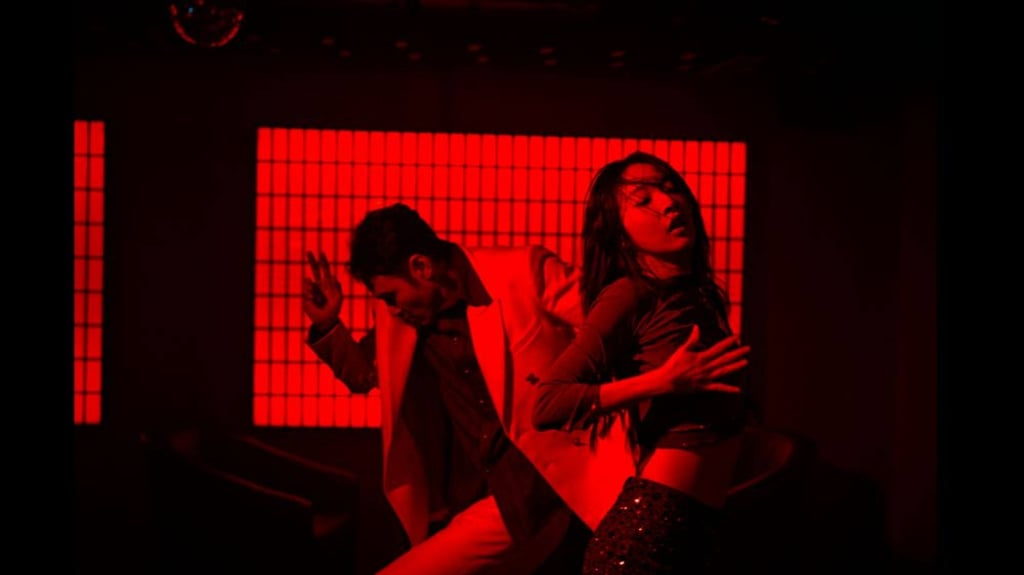
Yet there is something about the film that makes it difficult to dismiss as simply another genre exercise. A large part of that comes from its atmosphere. Shot in Taiwan but deliberately given the feeling of another era, the film often looks as though it has wandered out of the 1970s. Old streets, abandoned places, unusual interiors, costumes and carefully controlled colours create a world that seems caught somewhere between the past and the present. Sabu wanted the audience to wonder when and where the film was taking place, and that uncertainty becomes part of its charm.
The visual world also gives the film a strange melancholy. Behind all the movement and comedy is a man carrying the weight of something he cannot properly remember. Lee's guilt is always somewhere in the background, even when the film is being playful. Ethan Juan brings a convincing physicality to the role, but it is his vulnerability that makes the character work. His three months of judo training may be visible in the action scenes, yet the more memorable quality is the sense that this powerful detective is gradually losing control over his own mind.
Sabu's interest in absurdity extends beyond Lee's memory loss. The producer's note places the story against a world obsessed with money, consumption and capitalism. The image of money falling from the sky while a rescued child runs after it like snow is almost playful on the surface, but it carries a darker suggestion. Everyone is chasing something. Everyone is consuming something. And perhaps, somewhere along the way, we have forgotten what exists outside ourselves.
Still, Sabu does not make a completely cynical film. In fact, his director's statement suggests almost the opposite. He speaks about life as something cruel and absurd, but also about the things that remain after everything else disappears: love and humour. That idea quietly holds Arrested Memory together. Memory can disappear. Information can disappear. Certainty can disappear. But something more instinctive may remain.
This makes the film more than a detective comedy, even if it does not always escape the conventions of the genre. It is an entertaining, visually distinctive and often genuinely funny film that hides a surprisingly tender idea beneath its chaos. When Lee loses his memory, he does not simply lose pieces of his past. He begins, perhaps unknowingly, to rediscover himself without all the information that once told him who he was.
There is something special in that contradiction. Arrested Memory is sometimes conventional, but its heart is not. And beneath all the running, fighting, confusion and laughter, Sabu seems to be asking a simple question: when everything we know about ourselves begins to disappear, what is the last thing that remains?