Nepali cinema has gifted us a profound work of art: Abinash Bikram Shah’s Elephants in the Fog. It is not merely a film, but a haunting chronicle of existence standing outside the periphery of the conventional lens. The fog, which shrouds the footprints of elephants on the edge of the forest, serves as a mirror to the uncertain destination of the film’s transgender protagonists.
Set in a marginalized village in Nepal’s Terai region, the film portrays the elephant as more than a natural calamity; it is an inexorable, destructive destiny. At the heart of the narrative is Pirati, the matriarch of a small kinnar community held together by strict codes and shared secrets. Her life is a quiet tension—torn between a clandestine romance with a man from the outside world and the weight of her duty to her people.
The narrative pivot arrives with the disappearance of Apsara, a young member of the community. For Pirati, this is not just a personal grief; it is the brutal unveiling of a world that denies the very existence of queer lives. As she searches for the girl, Pirati is forced to transcend the boundaries of her personal dreams, shedding her individual vulnerability to embrace the collective strength of her community.
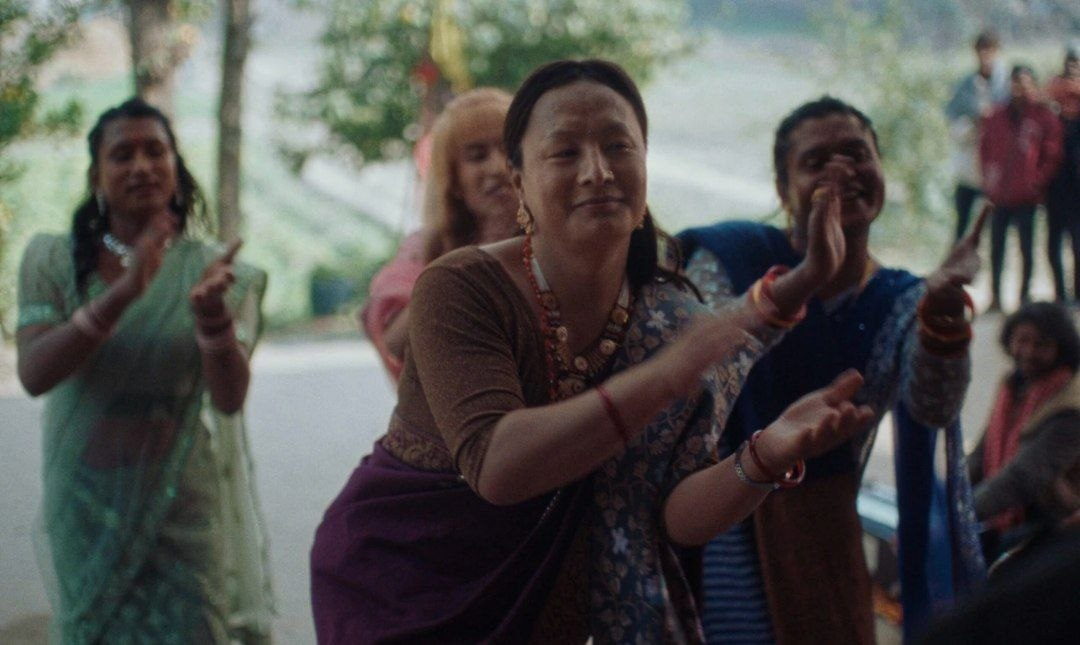
In Pirati, we witness a dual existence: one version lost in the fragility of love, the other resolute, courageous, and defiant—ready to go to any length to protect her kin. Apsara’s absence thrusts Pirati into a harsh reality, forcing her to redefine her commitment to those she leads.
Compared to other queer-themed narratives seen at festivals like Cannes, Abinash’s work stands apart. It suggests that for the marginalized, survival is not found through assimilation, but through an unwavering collective resistance.
The film utilizes two potent symbols. First, the fog—representing the blindness of a society that labels itself normal, behind which the rights and sorrows of transgender women are systematically hidden. Second, the elephant—not merely a wild animal, but a metaphor for an oppressive social structure. The director draws a chilling parallel: the home trampled by the beast is no different from the humanity crushed by the societal gaze.
The visual language of the film is akin to classic poetry—slow, still, and profound. A biting silence permeates every frame. The grayness of the mist feels like an eternal search for truth. When the camera peers through the fog seeking a shape, it ceases to be mere cinematography; it becomes an irrefutable testament to the periphery.
Elephants in the Fog is singular in its ending. It confronts us with a vital question: Is contemporary cinema merely using the stories of the marginalized as a stepping stone for the privileged to find their own redemption? Why does the center of our narrative gaze remain occupied by the empowered? Works like this strive to shatter those traditional, privileged structures, forging a new language of storytelling. In this, the film achieves a certain greatness.
Pirati’s journey offers a final, essential lesson: survival is not found in isolation or compromise, but in standing firmly, shoulder to shoulder, with one’s own community.