Kamal Aljafari is one of the most compelling voices in contemporary Palestinian cinema, not simply because of the subjects he chooses to film, but because of the way he approaches images, memory and the recording of history. His cinema often finds meaning in fragments, in images that might otherwise be overlooked, and in the lives and histories that larger narratives tend to erase. He understands that filmmaking can be an act of preservation, but also an act of resistance. In Going Home, he brings this sensibility into a deeply unsettling 21-minute film that confronts us with some of the harshest truths of our time.
The film takes place in the familiar surroundings of Aljafari's family home. He returns after three years away, only to find himself watching television reports from Gaza. What appears on the screen is almost unbearable: neighbourhoods reduced to rubble, houses stripped of their roofs and walls, people searching for drinking water, gathering whatever they can find to cook, and children trying to play amid the remains of their streets. These are not images from a distant past or an imagined catastrophe. They are records of a reality that continues to unfold before our eyes. Aljafari does not need to construct a dramatic narrative around them. The images themselves carry a terrible weight. Even the most ordinary acts of survival acquire an entirely different meaning when we see the conditions in which people are forced to live.
Going Home’s most striking decision is to make the television screen the centre of its visual world. By filming the footage as it appears inside his parents' living room, Aljafari creates an unusual relationship between the images and the space in which they are being watched. The tragedy of Gaza enters the domestic sphere, occupying a place among the familiar objects and memories of a family home. His mother's discomfort with being filmed, and her request that he stop recording the television and erase the footage, introduces a deeply personal tension. There is something particularly affecting about this exchange. While the filmmaker feels compelled to preserve what he sees, his mother seems unable or unwilling to have these images brought further into their home. The distance between witnessing a tragedy and having to live with its reality becomes painfully apparent.
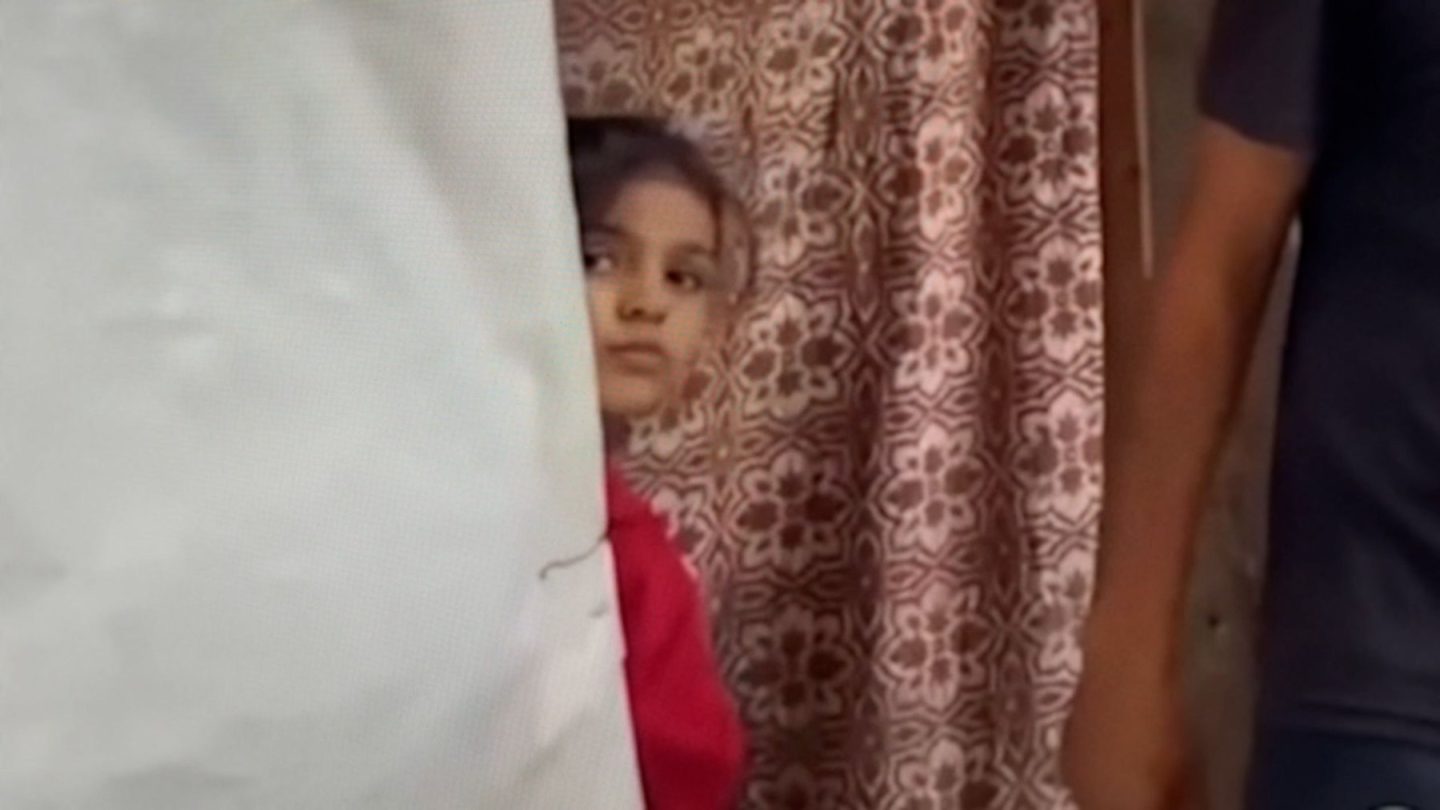
Simon Fisher Turner's music is equally important to the film's emotional force. The score does not simply accompany the images; it deepens their emotional impact, making the already devastating realities on screen even more difficult to bear. Its presence is particularly affecting because Aljafari never allows the music to turn the suffering on screen into something conventionally cinematic or sentimental. Instead, it seems to settle beneath the images, allowing their horror to reach us in a different way. The voices that occasionally emerge from the television, the fragments of testimony and the quiet moments surrounding them all contribute to an experience that is difficult to shake off. A little girl's recitation of a poem about her destroyed home, which has become too small for her dreams, is especially devastating. Her words carry an innocence that makes the destruction around her all the more difficult to comprehend. It is one of those moments when the limitations of language become painfully clear.
At one point, the film poses a question that seems to linger long after it has been asked: “The picture says what the story cannot?” It is perhaps the most revealing question in the entire film. Aljafari seems to be searching for something beyond the limits of spoken language, something that only the image can carry. The destruction, the faces, the ordinary struggle to find water or prepare a meal: these images tell stories that words often fail to contain. Yet the question also carries a certain unease. What can an image really communicate about the lives behind it, and what remains beyond its frame? In Going Home, the images do not merely illustrate a tragedy. They become witnesses to it.
What makes Going Home so powerful is that Aljafari never pretends cinema can repair what has been destroyed. Nor does he attempt to offer an explanation for something that should never have required one. Instead, he places these images before us and asks us to confront them. The film also makes us think about the responsibility of looking, about the endless circulation of images of suffering and the unsettling fact that seeing so much does not necessarily mean that the world will act. We have become accustomed to watching the destruction of Gaza through television screens, often from the safety of our homes. Aljafari turns that familiar act of watching into something far more uncomfortable. His mother's request to erase the footage remains with us, almost as a question about what it means to keep recording when the reality itself is so difficult to bear.
At just 21 minutes, Going Home leaves a considerable impression. Its images are painful, its emotional register is remarkably controlled, and its formal simplicity makes its subject even harder to escape. Aljafari has made a film that does not ask for our sympathy through dramatic gestures. It asks something more fundamental: that we look, that we listen, and that we do not turn away. Some images remain with us because of what they show; others because of what we understand about the world after seeing them. Going Home manages to do both.