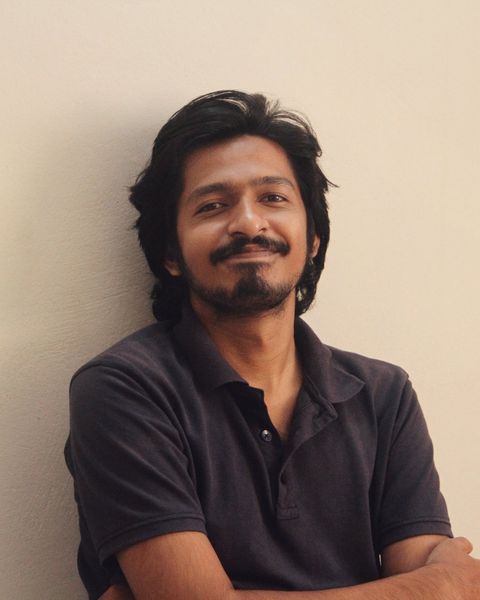
In Promised Spaces, you contrast the people who build these high-rises with the people who eventually buy or inhabit them. What drew you to this specific social dynamic, and how did you approach exploring it visually?
The inequality is visible through the spaces themselves. On one end, there is an idea of privilege and progress that is embedded in residential gated complexes. The workers building these places will likely never afford to live in them—at least, not when they are completed.
Seda, the first tenant of a newly completed luxury complex, soon realizes that the real place doesn't match the perfect images on the advertising billboards, and that the secluded exclusivity translates into isolation. With their walls, gated complexes create spatial and class segregation. Increasingly popular around the world, such buildings look the same everywhere.
What makes it unique are the people. The community of workers who live in an unfinished high-rise building are a very important part of the film—the encounter with them changed the script and defined its hybrid form. We wanted to show the dignity and effort with which they are adapting these difficult conditions into a collective home. Their togetherness and solidarity are, in a way, the opposite of the lifestyle that will exist in such buildings after they are finished.
What first drew you to Phnom Penh, and how did the city itself change or shape the visual style of the film while you were shooting?
I wrote the first version of the script during my stay in China, after completing my first feature, From Tomorrow On, I Will, which I co-directed with Linfeng Wu in 2018. That film portrays a migrant worker in Beijing surrounded by towers that seem like huge walls around him. Promised Spaces began from the opposite perspective: what it feels like to live within those walls.
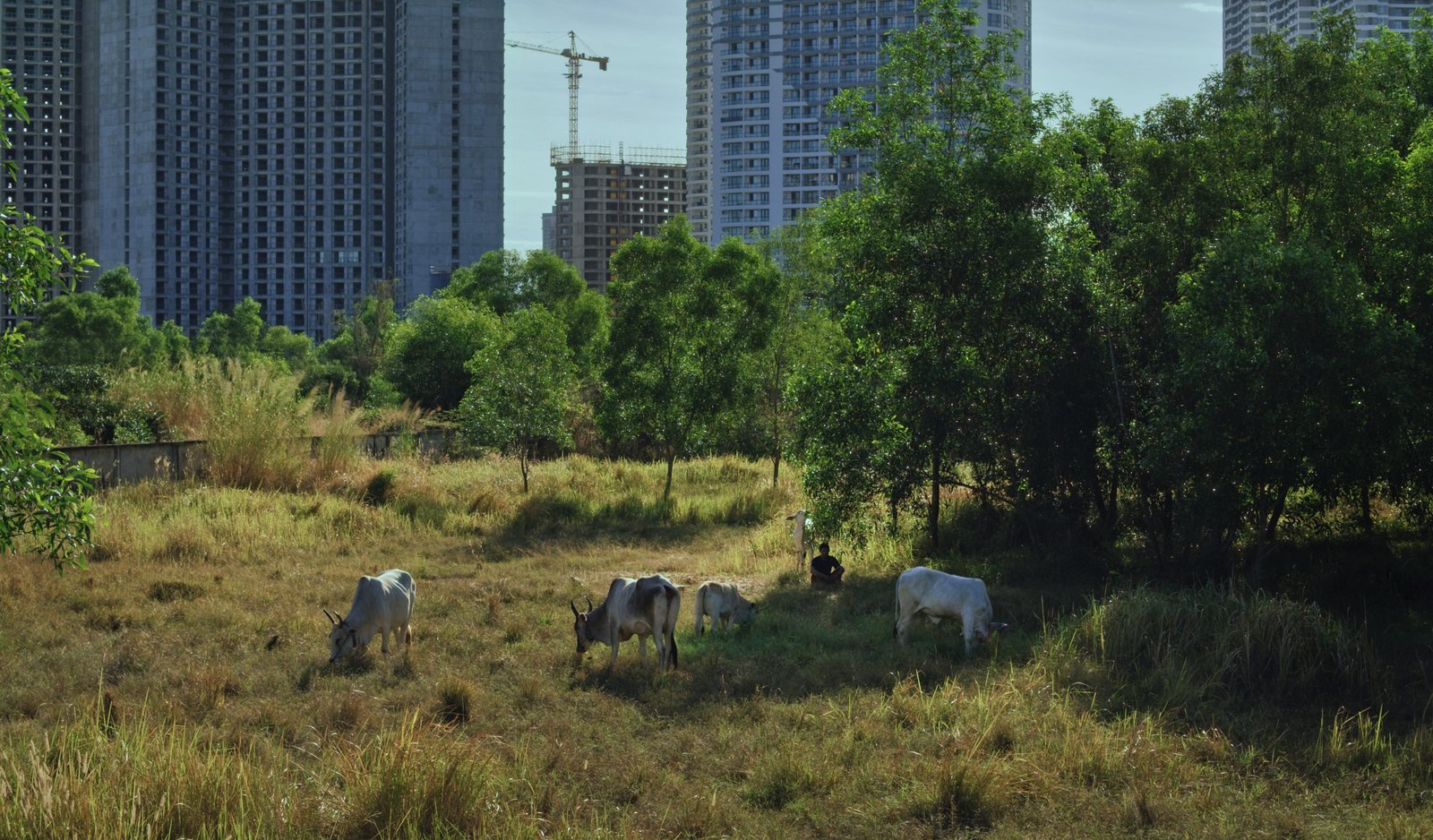
After spending several months in Cambodia during an artist residency and meeting the film collective Anti-Archive, I decided to place the film there. The speed of urban development in Cambodia feels unstoppable and immense, yet these changes bring strong contradictions. Despite all the new high-rises, the way people live, eat, work, and spend time together still resists change.
Working in a country I am not from required close exchange with Cambodian collaborators. The support of directors Davy Chou and Kavich Neang, along with their collective Anti-Archive, was crucial. Over many months, I worked closely on location scouting and street casting with Savunthara Seng, Kanitha Tith, Siden Kong, and other friends. Script collaborators and assistant directors Mio Thorng and Savunthara Seng approached translation as something that involved more than words—it entailed translating meanings. The people and places we encountered during this long preparation deeply influenced both the script and our visual approach.
In Promised Spaces, the architecture is massive, and the workers are real people, not professional actors. How did you navigate the relationship between these giant concrete structures and the human bodies inside them?
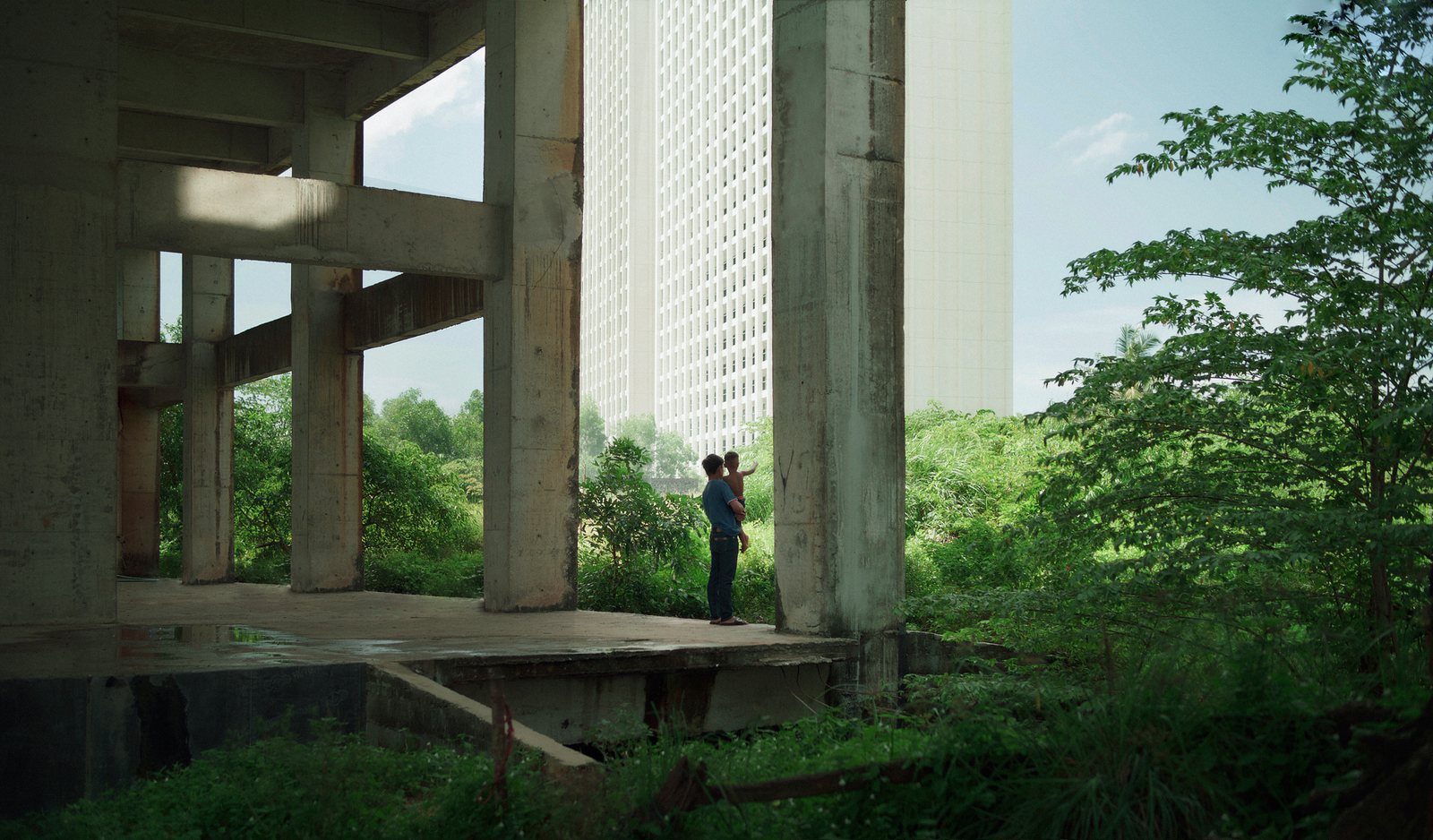
In comparison with the scale of the buildings, the people seem defenseless—especially those who are building them. The scale that is supposed to display luxury appears differently when the buildings are unfinished, exposed to weather, and almost vulnerable.
The last chapter shows fragments of the life of workers who live among endless rows of abandoned, unfinished buildings. We see how they adapt concrete skeletons into their homes. While the scale testifies to chaotic urban development, this apocalyptic setting enables an almost utopian vision of what these spaces could become if derailed from their original purpose.
Despite appearing the most abstract, these scenes were shot in the most documentary manner. Accompanied mostly by Savunthara Seng and Lyna Kourn, DP Katharina Hauke and I spent time with one community of workers living in these skeletons. With a minimal crew, we observed how life unfolds and gradually started improvising fictional scenes with the tenants.
The film contrasts the dusty construction sites with Seda's sterile apartment, using natural and artificial light to shift the mood across different times of day. How did you and your co-cinematographer Katharina capture these distinct visual styles?
The billboards—rendered images advertising real estate—are a recurring motif. At first glance, the new buildings are shiny like a mirage, yet up close, seeing their quickly worn-out materials, the illusion fades.
We wanted to create the experience of this confusing setting with minimal intervention. Rather than using artificial light and relying on set design, Katharina and I spent long periods scouting locations and observing their angles throughout the day to make the most of natural light.
Working in this setup was also essential because we worked with mostly non-professional actors. Despite the prominent architecture, our main focus was the portraits. Creating a physical sense of how people move, listen, speak, sweat, and feel lost brings the characters closer despite their class divisions.
The film often cuts between the enclosed interior of the buildings and the vast exterior landscape of the city. How do you view the relationship between the inside and the outside spaces?
The long conversation scene between the construction workers is followed by a scene of heavy rain falling on immense unfinished buildings, which for the first time seem vulnerable. The workers' stories inhabit the images that follow—impressions of spaces and characters change throughout the film. Similarly, following her initial disappointment upon moving into the new apartment, Seda's shiny new gated neighborhood starts to feel claustrophobic.
You co-wrote the screenplay with Tanja Šljivar. How did you write a film that relies so heavily on silence, observation, ambient noise, and subtle soundscapes rather than traditional dialogue?
Tanja and I collaborated on the first draft of the script, from which the storyline of Seda remains largely unchanged. The rest of the script evolved during research, shaped by the people we met and the places we found.
Compared to my previous films, this one actually has a lot of dialogue. Scenes without dialogue are not less narratively important: the film unfolds through fragments of lives, situations where people speak a lot or not at all. There is nothing to interpret; only that which can be observed and felt.
Image and sound are equally important in creating a sense of presence. The sound design is mostly made of sounds native to the locations: farm animals, birds, and crickets fusing with the low vibrations of construction machines working night and day.
Having built a strong body of work as both a director and a cinematographer, how do you see your visual voice developing in Promised Spaces independently of your past DP collaborations?
I have been making films as a director for more than ten years, and Promised Spaces emerged directly from themes and a visual language that I have been developing in my own work over time.
While every collaboration as a cinematographer involves a meaningful exchange of ideas, none of them served as a direct influence on this project. Ultimately, the visual identity of Promised Spaces was shaped by the specific spaces, characters, non-professional cast, and key collaborators who worked directly on this film.
The title Promised Spaces is very evocative. For you, what is the 'promise' that these modern buildings or spaces are making, and to whom?
The buildings promise happiness through owning something others do not or cannot have. Advertised as a vision of a perfect home, gated complexes are based on exclusivity and shutting the world out. In a way, they reflect the way the world is changing: toward isolation, inequality, and abandoning communality.
The last scenes show these places crumbling, and in this apocalyptic setting, the sense of community among workers seems almost utopian. The spaces are inhabited by a sense of togetherness, which opens a more hopeful reading of the name.