Katharina Rabl’s Memories of a Forest, presented at TIFF, begins with a journey back home. Frieda (Julia Windischbauer) is about to fulfil her dream of an academic career when news arrives that her grandmother has died in the Austrian village where she grew up. On the train, Frieda looks back on her childhood, while a female voice-over reflects on the life of Elisabeth, a woman who never seemed to find peace in her marriage. The birth of her granddaughter appeared to change something in her life, as if the child had briefly repaired a broken family and given Elisabeth a reason to hope.
At home, her parents are preparing for the funeral. The family is struggling financially, to the point that even paying for the funeral and a separate grave for Elisabeth is difficult. Then Frieda’s mother discovers the grandmother’s will: Elisabeth has left her granddaughter 500 hectares of spruce forest. What initially sounds like an extraordinary inheritance quickly becomes another burden. The parents desperately need money, but the forest is not simply property to be sold. For Frieda’s mother, it represents her mother’s wishes, her own childhood and everything that has been sacrificed to preserve the family.
The forest therefore becomes the film’s central metaphor, but Rabl does not turn it into an abstract symbol disconnected from material reality. This is a world in which people actually need the money that the trees might bring. The farms are modest, the work is physically exhausting and there is little financial security. Frieda’s parents have spent their lives barely making ends meet, and the inherited land becomes a painful reminder of how little room previous generations had to choose a different life.
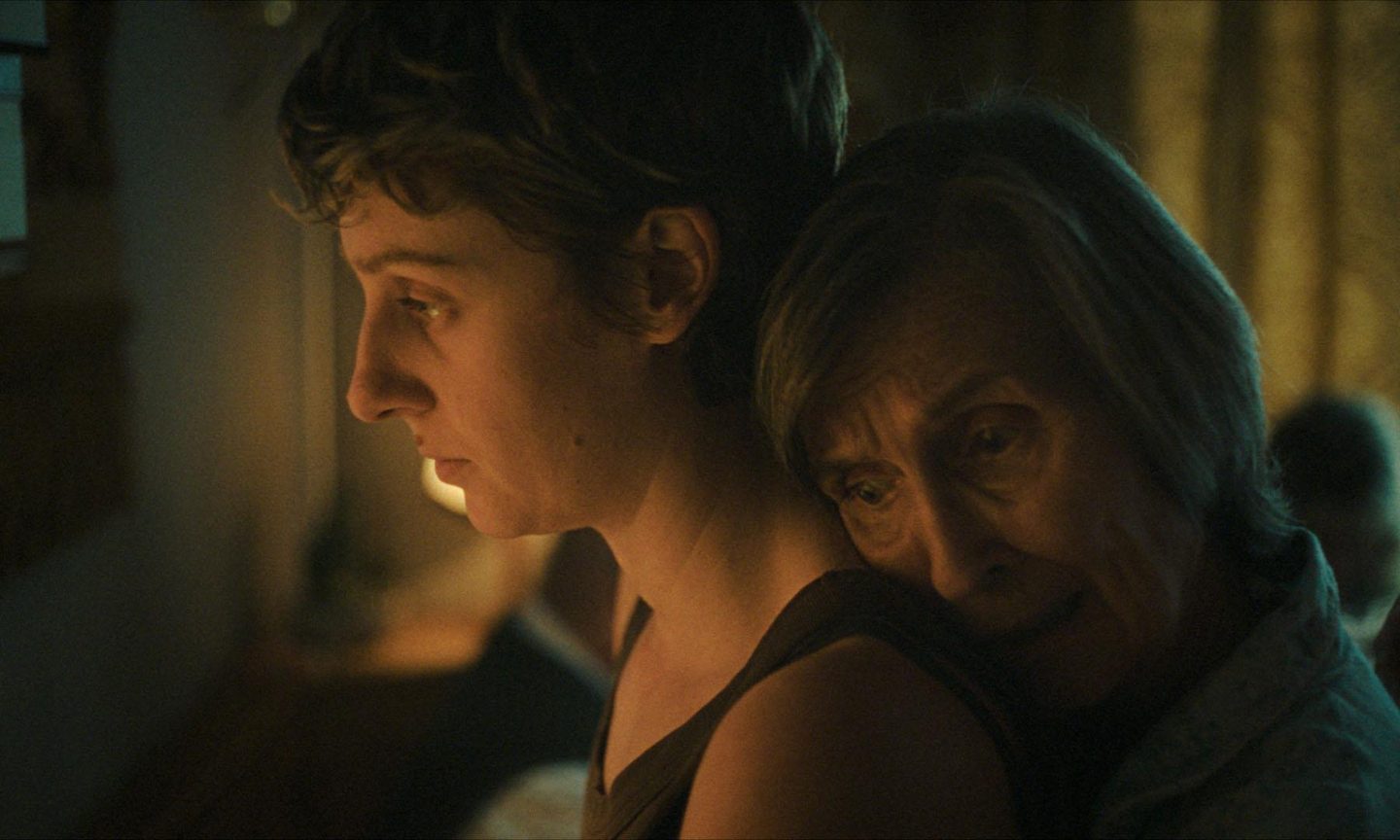
This gives Memories of a Forest an unusually precise understanding of rural Austria. The village is neither romanticised as a lost paradise nor treated as a backward place from which an enlightened young woman must escape. It is simply a difficult place to live. People work hard, remain tied to land and family, and carry obligations that are rarely discussed openly. Frieda’s conflict with her mother is therefore not just a generational argument. It is a confrontation between two different ideas of what a woman owes to her family.
Her attempts to deal with the forest bring her closer to Friedrich (Lukas Walcher), a handsome neighbour who agrees to help her manage it. He is married and has recently become a father, but he too carries the weight of a recent family tragedy. Their attraction develops almost imperceptibly, less as a conventional romantic subplot than as another possibility opening in front of Frieda. Friedrich belongs to the world she is trying to leave, yet he also understands it in a way that nobody else can. Their growing intimacy makes the question of whether Frieda can really escape her origins even more complicated.
Rabl films this world with the restrained realism of the Berlin School: natural light, unforced performances, everyday gestures and a camera that observes rather than dictates what we should feel. Cinematographer Jacob Kohl gives the forest a tactile, almost physical presence, while the machinery, timber and manual labour constantly remind us that this landscape is also an economic resource. There is little conventional melodrama in the way the family confronts its problems. Even the most painful discoveries emerge through apparently ordinary conversations, documents and fragments of memory.
The film occasionally allows itself to move beyond this realism. Its most striking departure comes during a rave, when Frieda imagines herself with Friedrich. For a brief moment, reality seems to loosen its grip, as if the past of her grandmother has somehow descended into the present and Frieda is experiencing a life that existed before her but continues to shape her. The scene feels almost like a transmission across generations: Elisabeth’s desires, compromises and unfulfilled possibilities passing silently into the body and imagination of her granddaughter.
This is where the forest becomes more than an inheritance. As Frieda investigates her grandmother’s past, she gradually discovers a secret that Elisabeth carried throughout her life — and that the forest itself seems to have preserved. The deeper Frieda goes into the history of the land, the more she recognises parallels between Elisabeth’s choices and her own.
There is an intriguing echo here of Maryna Vroda’s Stepne, another film in which returning home after a mother’s death opens a passage into buried memories, family secrets and the lives of people who came before us. Vroda’s Ukrainian village and Rabl’s Austrian countryside are obviously worlds apart, but both films understand home as a place that refuses to remain merely geographical. It is where memory accumulates, where the dead continue to speak and where the past becomes inseparable from the landscape.
Yet Frieda’s return is not presented as a healing journey. The village does not suddenly become home again, nor does discovering the truth about Elisabeth resolve the tensions with her mother. Rabl is more interested in something less comforting: understanding where you come from does not necessarily mean wanting to return there. Sometimes knowing your roots is precisely what allows you to understand why you have spent your life trying to grow in another direction. Memories of a Forest is ultimately about inheritance in its broadest sense — land, money, trauma, expectations, desires and silence.