Andrey Zvyagintsev's latest feature reworks Claude Chabrol's La Femme infidèle into a study of Gleb and Galina, a married couple moving through the particular crisis that tends to arrive in a marriage's fourth decade of life, when the certainties of a shared existence begin to erode.
Gleb is the director general of a company. He lives with his wife and teenage son in a house at the heart of a forest, an environment that some would call idyllic. The seclusion proves deceptive. Suspecting Galina of infidelity, Gleb sends a friend to follow her, and the suspicion is confirmed: she is involved with a young photographer. Gleb recognizes that a face-to-face confrontation is inevitable.
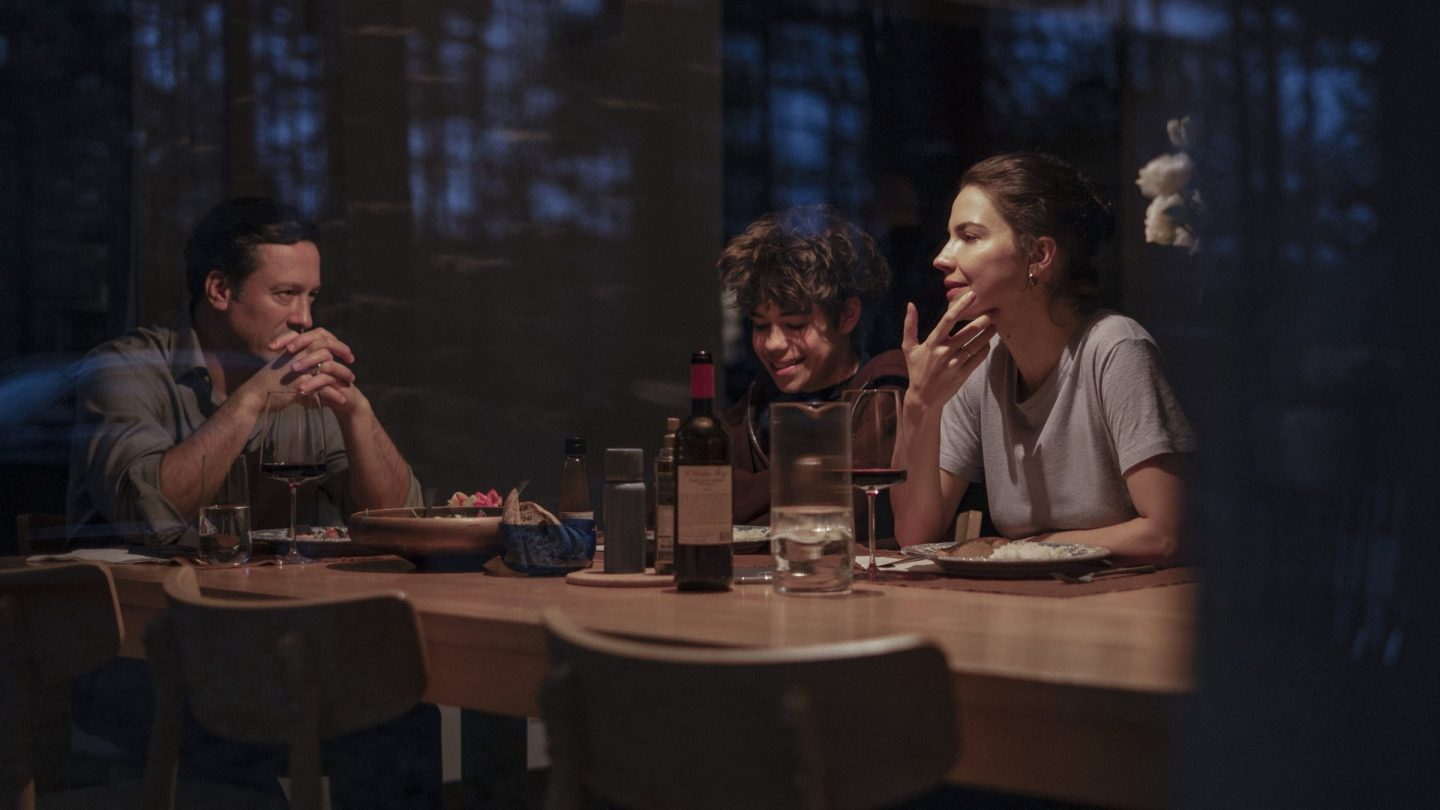
The film's central conceit lies in Gleb's character. He is a man accustomed to controlling the lives of those around him. The narrative is set at the outset of the war between Russia and Ukraine, and in his professional capacity he dispatches people to the front because the system requires it. Within his household he exercises the same authority on a smaller scale, and the consequences are devastating. The parallel between institutional power and domestic control is the intellectual backbone of the film.
It is also where the film falters. Conceived as a satire, Minotaur does not, in this reviewer's view, succeed in unifying its two registers. The political argument and the family drama read as separate conceptual strands. Zvyagintsev appears to intend a seamless symbiosis, yet the result is closer to oil and water: the two elements coexist on screen without ever fully blending, and each diminishes the force of the other.
The film contains roughly three exceptionally well-realized sequences, in which direction and craft converge with real authority. Beyond these, it is competent but unremarkable. The infinite blue that recurs visually evokes Leviathan and Loveless, a recognizable authorial signature, though one that here recalls the earlier films' impact more than it matches it. The premise promised a sustained, intense examination of a marriage under pressure, and this is where the film most disappoints. Greater focus on the interaction between the characters and on the dynamics of their relationship would have served the material well. Too often the political framework draws attention away from the people at its center.
One scene near the end warrants closer attention and analysis. It is arguably the moment that brings the couple back together, and it poses a troubling question: can the remnants of a marriage that seems destined to fail truly be salvaged? The film leaves the question unresolved, and that ambiguity is among its most haunting qualities.
The sound design is the film's other notable achievement. At moments it is genuinely unsettling, particularly in the final shots, and it recalls the aural landscape of The Zone of Interest. Much of the film's dread is carried by its soundscape, at times more effectively than by its images or script.
Minotaur is not Zvyagintsev's finest work, and it does not reach the heights of his earlier films. It is, however, arguably the signature film of his period of artistic maturity: the work of a director assured in his themes and style, even when the execution is uneven.