Class difference has rarely felt as painfully intimate on screen as it does in Visar Morina’s Shame and Money. It is not simply a film about people who have too little money, nor does it treat poverty as a condition that can be understood through a collection of hardships. Morina looks at the ways economic inequality enters a family’s private life, changing how people see themselves and one another. Money becomes something far more complicated than a means of survival. It becomes a measure of dignity, a source of shame and, sometimes, an invisible wall between people who belong to the same family.
Shaban and Hatixhe live with their three daughters in rural Kosovo, where their livelihood depends on dairy farming. Their life is modest, but it has a structure and a certain independence. When a family dispute costs them their cows, that fragile stability begins to disappear. They move to Pristina in search of work and a place to live, eventually relying on Hatixhe’s wealthy sister and her husband for help. What appears to be an opportunity to get back on their feet gradually becomes more complicated. The difference between the two households is not merely financial. It exists in the way they inhabit rooms, speak to one another and understand what it means to help someone. For Shaban, accepting assistance is inseparable from the feeling that he has lost something of himself.
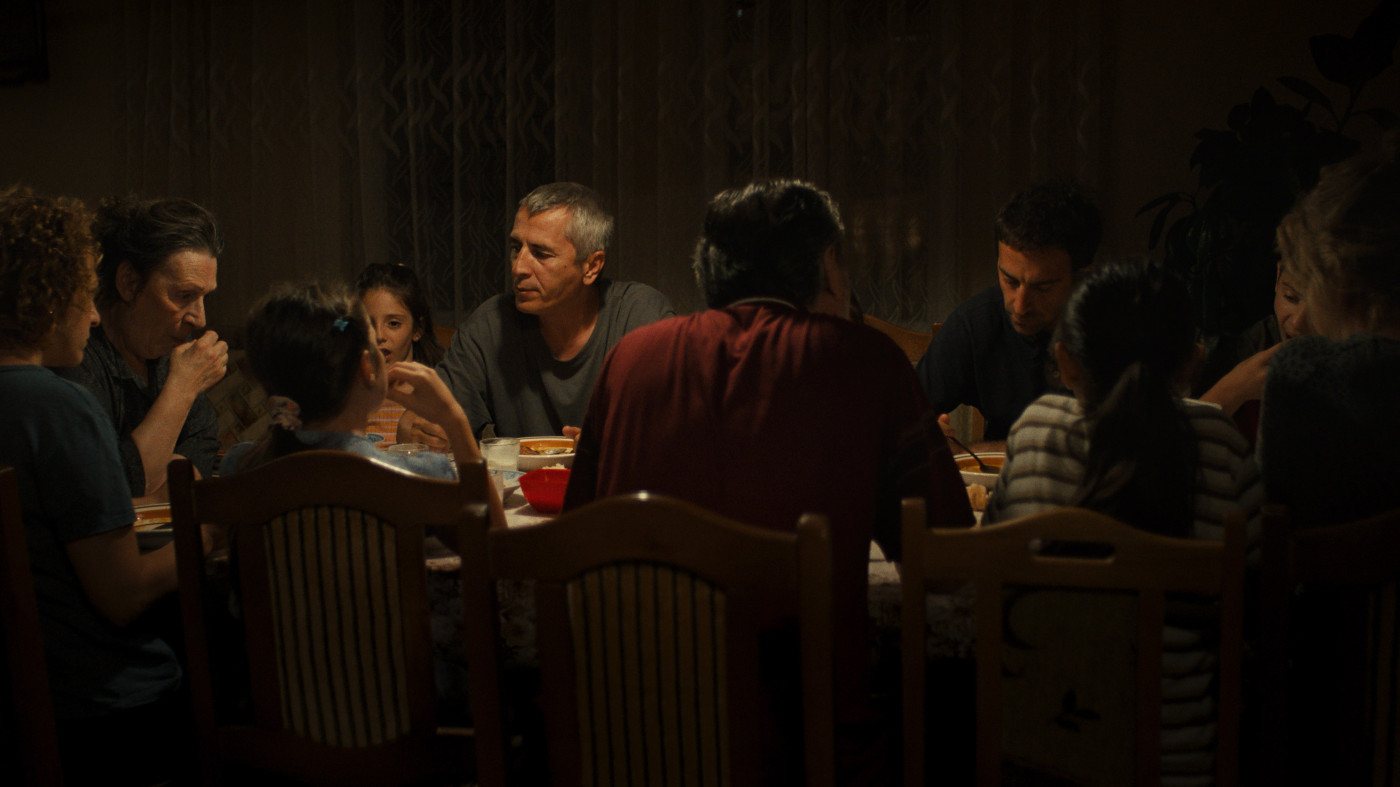
Morina understands that economic hardship is rarely confined to the question of how a family will pay its bills. It follows people into conversations, meals and moments when they would rather forget their circumstances. The humiliation is often subtle. Nobody needs to openly announce the difference between the rich and the poor; it is already present in the arrangement of their lives. One family can offer help without having to reconsider its own comfort, while the other must accept that help and live with everything it implies. This is where Shame and Money becomes particularly powerful. The film does not turn its wealthier characters into simple villains, nor does it romanticise the struggles of those who have less. Instead, it observes how unequal circumstances can make even ordinary human interactions uncomfortable. Kindness itself becomes difficult when the person receiving it cannot escape the feeling of being indebted.
Astrit Kabashi’s performance as Shaban is extraordinary. He captures a man whose distress is not always expressed through words, but can be felt in his posture, his silences and the way he carries himself around others. There is something deeply painful about watching him attempt to preserve his self-respect while the conditions that once supported it are gradually taken away. Kabashi never turns this struggle into a display of suffering. His performance is restrained, precise and full of contradictions. Shaban can be proud, vulnerable, difficult and deeply human at once. The character’s dignity is important to him, but that same dignity can make it harder for him to accept the reality of his situation. Kabashi allows us to feel both sides of this conflict without asking us to judge him too quickly. Flonja Kodheli and the rest of the cast are equally convincing, giving the family a lived-in quality that keeps the film grounded in human relationships rather than reducing its characters to examples of social inequality.
There is an admirable honesty in Morina’s filmmaking. He does not seem interested in making poverty look beautiful or turning struggle into an inspirational journey. His approach is patient and unsentimental, attentive to the small humiliations that accumulate when people lose control over their circumstances. The film takes its time, allowing economic pressure to settle into the rhythm of everyday life. Its observations are often uncomfortable precisely because they feel so familiar. There are no easy solutions waiting around the corner, no sudden transformation that can restore everything the family has lost. The struggle continues, and the characters must find ways to live within it.
What stays with me about Shame and Money is its understanding that poverty can take away more than material security. It can disturb the balance between husband and wife, parents and children, relatives and strangers. It can make a person feel small in a room where nobody has explicitly asked them to feel that way. Morina makes us look closely at these moments without exaggerating them, trusting their accumulated weight to speak for itself.
Few films approach class difference with such honesty and such attention to the intimate damage it can cause. Shame and Money recognises that the struggle to survive is also a struggle to remain oneself when the world keeps reminding you of what you do not have. And sometimes, the hardest thing to lose is not money, but the freedom to stand before others without feeling ashamed.