Seventeen-year-old Kim in The Matriarch, premiered at Tallinn Black Nights Film Festival,
has learned to live in the shadow of her mother. Their home, somewhere on the Baltic coast, is also a transit point in an illegal business: behind an ordinary kitchen cupboard lies a concealed room where Vietnamese migrants wait to be smuggled into Germany. Kim’s mother is the operation’s formidable leader. She arranges their passage, provides them with forged documents and collects payments from relatives in Vietnam. The apartment is both a family home and a temporary shelter for people whose lives have been reduced to a dangerous transaction.
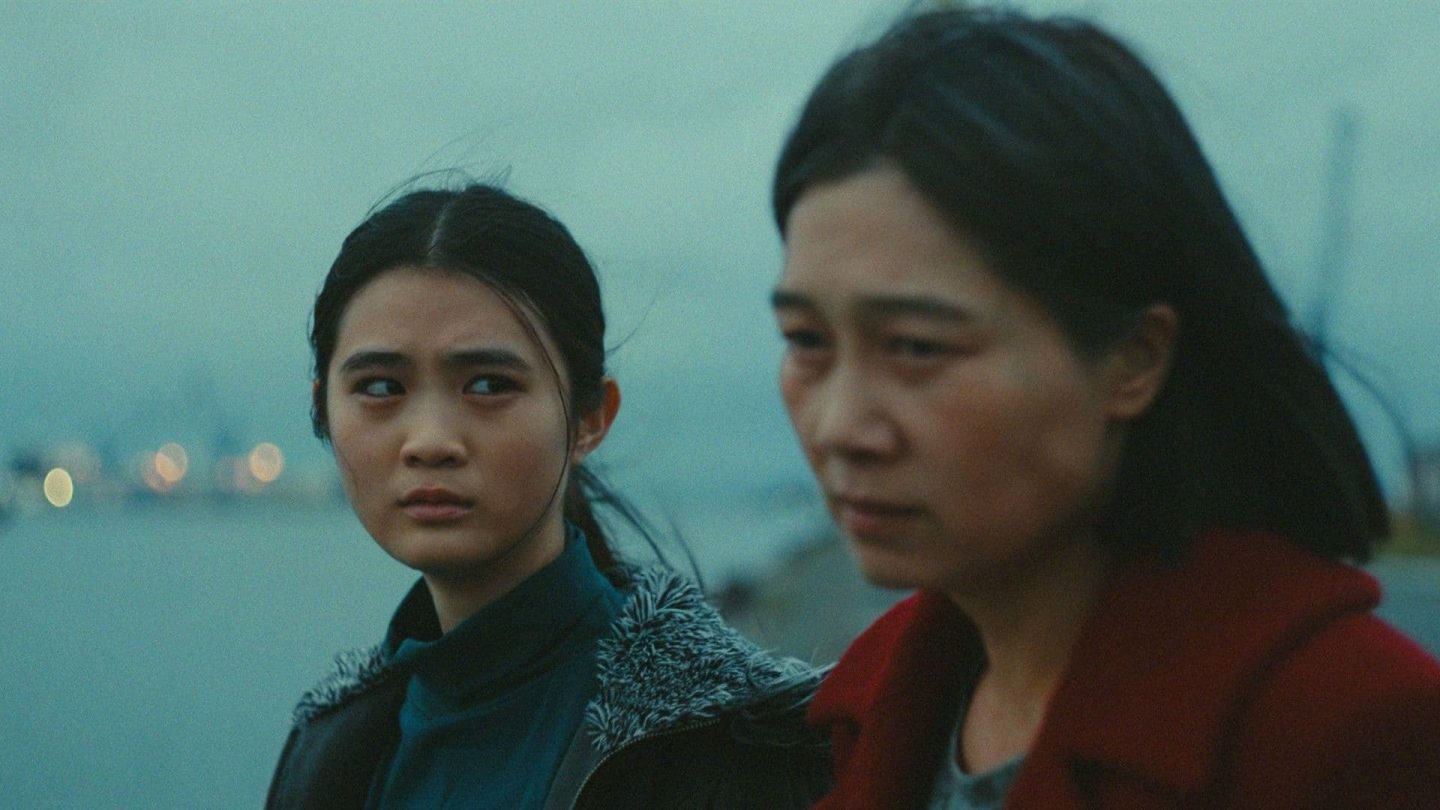
Kim seems to be afraid of her mother, yet she is constantly trying to anticipate her wishes. She takes care of her younger brother, helps him with his homework, takes him to school and looks after the household. She also knows more about her mother’s business than a teenager should. Her attempts to be useful gradually turn into a deeper involvement in the criminal enterprise, as if earning her mother’s approval were a responsibility she could never put aside.
The film establishes the nature of this relationship with remarkable economy. In one of its earliest scenes, Kim tries to save an injured ferret, only to be forced by her mother to kill the animal. It is a small but devastating episode, revealing the hierarchy of power in the household and the brutal lesson Kim is expected to learn: compassion is a weakness, and obedience matters more than personal feeling. The mother’s authority is not expressed through constant displays of anger. It is embedded in the everyday routines of the family, in the expectations she imposes and in the fear that governs the behaviour of those around her. She is a strong, resourceful woman who has built and maintains a clandestine business, but her strength has taken the form of an uncompromising appetite for control.
The balance of power begins to shift when Luc, her former right-hand man, breaks away and establishes a competing operation. He is a dangerous opportunist, apparently without firm principles, and his new business threatens not only the mother’s position but the fragile order
of Kim’s world. The rivalry between the two organisations becomes increasingly tense, particularly as Luc attracts some of the people who once worked for Kim’s mother by offering cheaper services. Kim is drawn into the conflict, first as an assistant and then as someone expected to take responsibility. What begins as a desire to prove herself becomes a gradual initiation into a world where loyalty is measured by obedience and every decision carries consequences.
Alison Kuhn is a German-Vietnamese filmmaker, writer and actress who has already established a strong presence in the German film scene. Her feature debut, the documentary The Case You (2020), premiered at IDFA and received numerous awards, including the German Documentary Film Award for Arts and Culture. Drawing on her own experience as one of the actresses involved, Kuhn examines a casting process in which several young women were subjected to sexual and physical abuse under the pretext of artistic work. Rather than simply documenting their testimonies, she creates a space in which the women can reconstruct what happened and reclaim control over their stories. This interest in power relations, vulnerability and the ways in which individuals resist abuse also resonates in her later work. In her fiction filmmaking, however, Kuhn shifts the focus from the direct testimony of survivors to a young protagonist caught inside a system of violence and exploitation, asking how much agency a person can preserve when the world around them seems to have already determined their place.
In The Matriarch yet Kim is not simply a young accomplice waiting to inherit her mother’s business. She is also trying to have a life of her own. Her relationship with a
Vietnamese-German boy who practises parkour opens up another possibility of belonging, one not defined by family obligations or criminal networks. Their romance gives the story a necessary counterpoint: Kim is still at an age when attraction, curiosity and the desire to discover herself should be central concerns. But even this emerging independence exists under the pressure of the world she has inherited. The film observes how difficult it is to separate private desires from the demands of a family whose rules have been established long before one is old enough to question them.
Although the narrative is built around human trafficking, criminal competition and escalating danger, the film remains closely attached to Kim’s subjective experience. Its approach is largely realist, attentive to ordinary gestures, domestic spaces and the small details through which a person's inner life becomes visible.
There is something of Jia Zhangke’s poetic realism in the film’s patient observation of people caught between social structures and personal aspirations. Its tension does not depend exclusively on dramatic revelations or spectacular action. Instead, it accumulates through Kim’s growing awareness that the world she knows is governed by rules she may no longer be willing to accept. The film allows the suspense to develop around a fundamental question: when the moment comes, what will she choose? Will she remain loyal to her mother, accept the role being prepared for her, or find the strength to break away?
Kim’s transformation is the real centre of the story. She is sensitive and caring, but those qualities have survived in an environment that continually demands their suppression. The terrible events she experiences force her to confront the difference between being loved,
being useful and being respected. Her mother may have taught her how to survive, but survival within this system comes at the cost of moral compromise.
At the same time, the film raises questions about roots and inheritance without reducing them to a simple opposition between a corrupt past and a liberating future. Family history can provide identity and a sense of belonging, but it can also become a weight that pulls a person back into violence, fear and predetermined roles. Kim is connected to a community and a history that she cannot simply erase. Her challenge is to decide which parts of that inheritance she can carry with her and which she must refuse.
Ultimately, the film’s most compelling tension lies not in the struggle between rival trafficking networks but in the possibility of moral escape. To break this cycle requires more than courage or a change of circumstances: it demands an inner moral strength that Kim is only beginning to discover. The film holds that question until the end, leaving us to wonder whether she can become someone other than the person her family has prepared her to be.