Francesco Zippel’s new 100-minute documentary "La Vita in Scena" (Vittorio De Sica – Staging Life) is far from a mere chronological biography of a filmmaker; it is a profound theoretical exploration of the institutional grammar of Italian Neo-Realism and its contemporary relevance. Premiering in the Cannes Classics section, the film meticulously and informatively captures De Sica’s transformation—from his days as a glamorous, romantic matinee idol of the 1930s to his post-war descent into the dusty streets of Italy, camera in hand.
The greatest strength of this documentary lies in its interview panel, which transcends superficial praise to engage directly with cinematic form. The insights provided by today's leading global filmmakers offer definitive proof of the many distinct facets that coexisted within De Sica.
Asghar Farhadi demonstrates how the social and psychological crisis in Bicycle Thieves (Ladri di biciclette) seamlessly mirrors the contemporary reality of Tehran, thereby imbuing the film with a timeless, universal character.
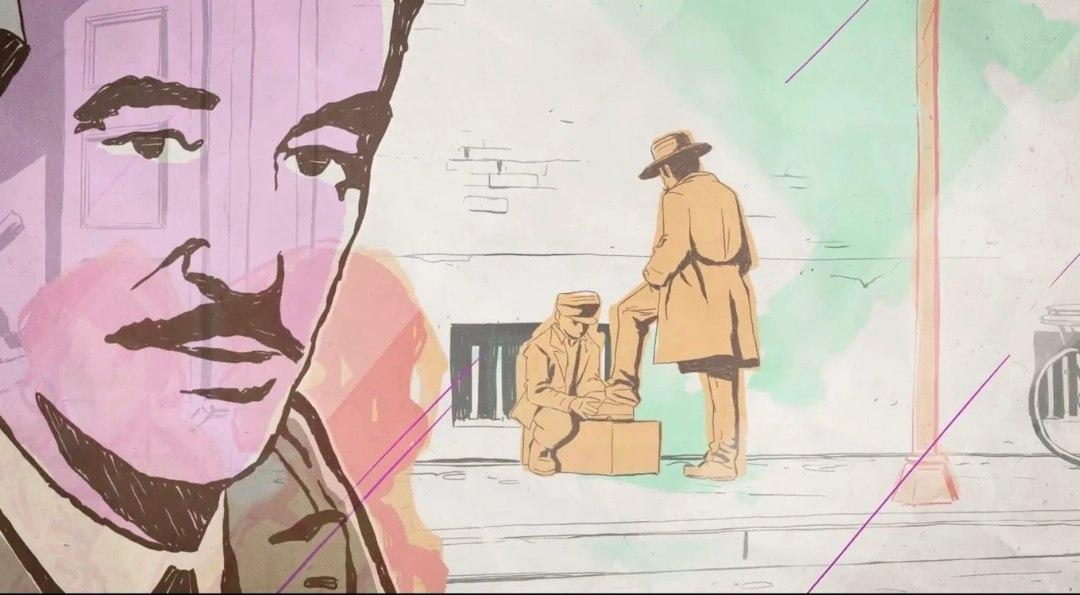
The Dardenne Brothers, Belgium's master duos, unpack De Sica’s precise technique of utilizing non-professional actors. De Sica did not force them to artificially act; rather, he extracted the inherent human "truth" right in front of the camera.
Francis Ford Coppola and Wes Anderson—directors from opposite poles of mainstream and American independent cinema—dissect De Sica's visual space and his narrative restraint.
Andrey Zvyagintsev, the modern Russian master, shares his exceptional insights into the internal spiritual and psychological depths of De Sica’s cinematic philosophy, alongside several others.
Zippel incorporates highly rare and previously unreleased archival footage into this documentary. In particular, the behind-the-scenes insights and onset footage of Shoeshine (Sciuscià) and Umberto D. lend the film an invaluable archival worth.
Simultaneously, the documentary uncovers De Sica’s fractured psychology. On one hand, he was an immensely popular and financially successful romantic hero of Italian theater and mainstream cinema; on the other, he was spending his own money to produce fierce socio-political films that the bourgeois society of the time found difficult to tolerate. The testimonies of his son, Christian De Sica, and granddaughter, Eleonora Baldwin, lay bare his double life, the complexities of his personal relationships, and his gambling addiction without any reservation.
As a director-portrait, Zippel’s approach remains classical and interview-driven. In certain instances, there was room for a deeper, more rigorous theoretical analysis of the technical aspects of De Sica’s visual direction—such as his interplay of light and shadow or his collaboration with the renowned cinematographer Carlo Montuori. Zippel, however, prioritizes De Sica's humanistic vision and philosophy over pure cinematic form.
Vittorio De Sica – La Vita in Scena stands as one of the most significant and informative additions to the 2026 edition of the Cannes Film Festival. It proves that Neo-Realism is not a dead chapter confined to history textbooks. As long as structural inequalities, human crisis, and marginalization persist in society, the steady, uncompromising gaze inside De Sica’s frame will remain an equally relevant and vital testament.