War does not always announce its presence through explosions, ruined buildings or the sound of gunfire. Sometimes it remains in a person's body, in the inability to sleep, in a sudden silence, or in the difficulty of returning to an ordinary day. In Women and War, Polish filmmaker Elwira Niewiera turns her attention to this quieter, less visible aftermath of Russia's full-scale invasion of Ukraine. Rather than revisiting the familiar images of destruction, she follows four Ukrainian women, Olena, Yuliia, Iryna and Lena, over the course of a year as they take part in a long-term therapy programme in the Carpathian Mountains. Each carries a different history of violence, and each is trying, in her own way, to find a life beyond it.
Their experiences are difficult to comprehend. Yuliia spent two years in captivity and now wants to identify those responsible for her suffering and testify against them internationally. Olena has returned home after six years in captivity, carrying injuries that make even the process of reclaiming her own body painfully difficult. Iryna, a ballet dancer from Mariupol, spent months hiding in basements during the siege. The experience has left her emotionally numb, unable to return to the dance that once defined her. Lena survived the siege of Azovstal, where her husband was killed, and must now find a way to rebuild her life with her daughters. Niewiera does not dwell on the details of their suffering for the sake of spectacle. We learn enough to understand what happened, but the film is more interested in what these experiences have left behind.
The historical circumstances are never far away. Russia's full-scale invasion of Ukraine in February 2022 intensified a war that had already been going on since 2014. The siege of Mariupol, the destruction of residential areas, the captivity of civilians and the systematic use of sexual violence have left thousands of people carrying experiences that cannot simply be put behind them. Women who survive such crimes often face another struggle after their release: finding recognition for what happened to them, dealing with the physical and psychological consequences, and trying to rebuild relationships with the world around them. Sexual violence in wartime is not an unfortunate side effect of conflict. It has repeatedly been used as a means of humiliation, control and intimidation. Yet the experiences of its survivors are still too often pushed to the margins of public conversations about war. Niewiera gives these women the space that is so frequently denied to them.
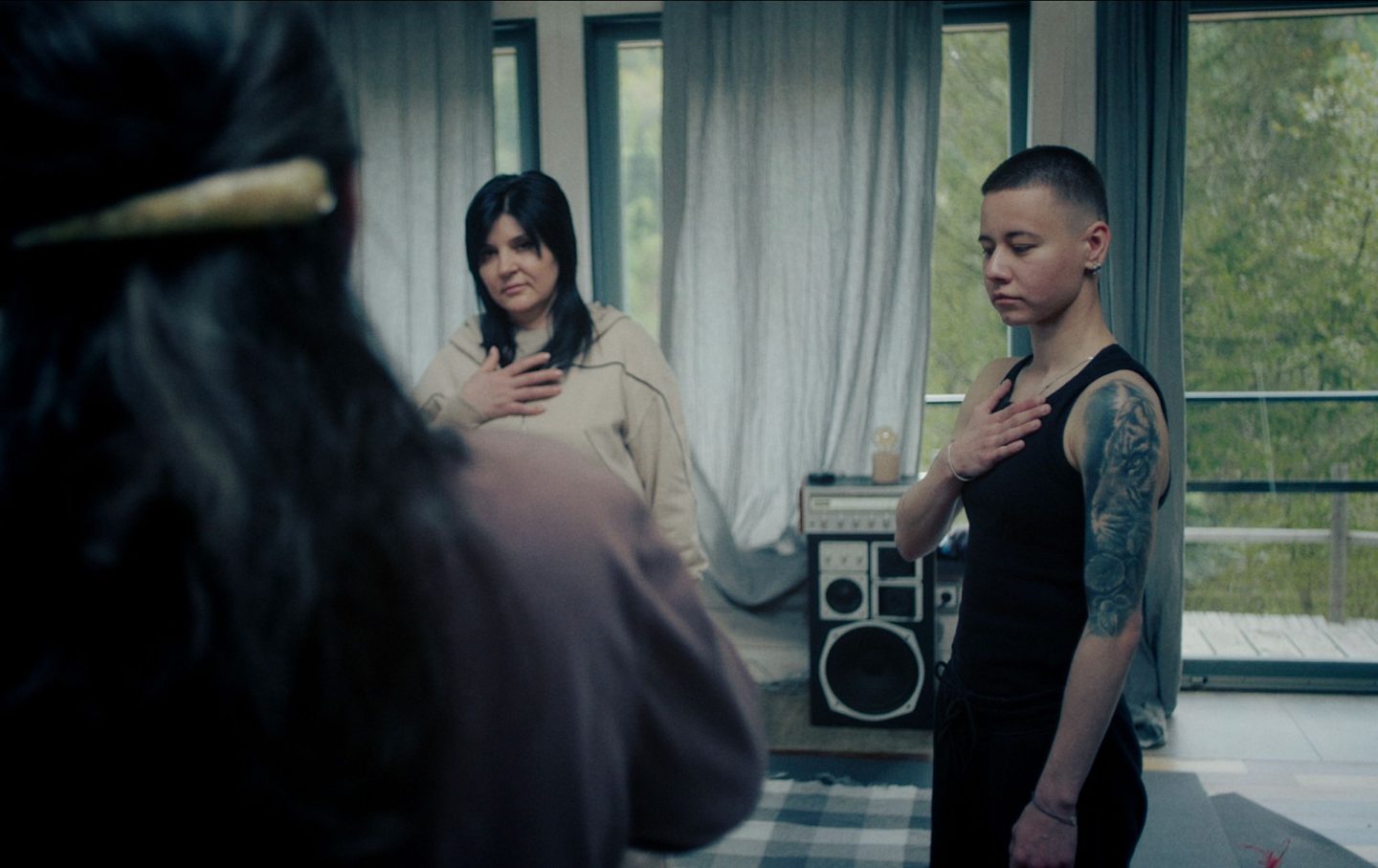
The therapy retreats form the heart of the film. In the quiet surroundings of the mountains, the women meet, talk, listen and gradually learn to share things they have perhaps kept inside for a long time. These sessions are not always comfortable to watch. There are moments of anger, frustration, resistance and long silences. Sometimes a woman struggles to find the words; at other times, another person's story brings back something she thought she had managed to contain. The camera stays with them without forcing an emotional response. It allows gestures, expressions and pauses to carry as much meaning as the conversations themselves. What makes these scenes particularly moving is the gradual change in the relationships between the women. They begin as individuals with separate histories, but slowly develop a sense of trust and companionship. Nobody can entirely understand another person's suffering, yet there is a certain comfort in being among people who do not need an explanation for everything.
Outside the retreats, the film follows fragments of their lives. Yuliia's search for justice becomes especially important. Her decision to gather evidence and prepare to testify is not presented simply as a legal pursuit. It is also a way of taking back some control over a life in which she was denied almost every choice. In one of the film's most significant developments, she eventually speaks before officials at the Council of Europe. For a woman who was once held captive, finding the strength to stand before an international audience and speak about what happened is an extraordinary moment. But Niewiera does not suggest that speaking publicly brings an end to her suffering. Justice and healing are connected, but neither comes easily.
Iryna's relationship with dance offers another deeply affecting thread. Before the war, movement was part of her identity. Now, her body seems to have lost its connection with something she once loved. Watching her struggle with this distance is particularly painful because dance is not simply an occupation she wishes to resume; it is a part of herself she is trying to recover. Lena's journey is quieter in a different way. The loss of her husband has left her with grief and the responsibility of raising her daughters while trying to make sense of her own future. Her conversations with her daughter become some of the film's most intimate moments. Olena, meanwhile, is still very close to the experience of captivity when she joins the group. Her presence reminds us that recovery does not follow a convenient timeline. Some wounds are still painfully fresh when others have already begun to find ways of living with theirs.
One of the film's finest qualities is its treatment of time and landscape. The Carpathian Mountains change with the seasons, and Niewiera allows these changes to become part of the film's rhythm. The peaceful surroundings are a striking contrast to the lives these women have returned to, where the war continues and the threat of further attacks remains. The mountains offer temporary shelter, but they cannot completely separate the women from the country they inhabit. Even away from the immediate violence, the war finds ways of returning through memory, anxiety and the body. The changing landscape also gives the film a natural sense of duration. Healing is not a sudden revelation or a neat passage from darkness into light. There are difficult days, small advances and moments when old feelings return. The film understands this without having to explain it at every turn.
Niewiera's decision to remain close to the women while respecting their privacy is central to the film's honesty. She does not enter every part of their lives, nor does she attempt to make
their trauma available for constant observation. The camera is particularly restrained during the therapy sessions, allowing the women to occupy the space without turning their vulnerability into a performance. This restraint matters. These are people whose bodies and private lives have already been violated. A documentary about them must be careful about how it looks, and Women and War seems deeply conscious of that responsibility.
By the end, the film does not offer a conventional account of recovery. The war is still happening, and none of these women can simply return to the lives they had before it. What changes is their relationship with one another and, perhaps, with themselves. They begin to recognise that their experiences do not have to remain locked inside them. There is something quietly powerful in watching them listen to one another, find moments of laughter and attempt ordinary things again.
Elwira Niewiera's Women and War is a film about women who have survived unimaginable violence, but it refuses to make suffering their only identity. It sees their anger, their uncertainty, their humour and their determination alongside their pain. More importantly, it reminds us that surviving a war is not the same as leaving it behind. Long after the images of destruction disappear from the news, the people who lived through it continue to carry its consequences. Giving them the time and space to be heard is not a small gesture. This film understands why it matters.